

It’s been a while since we took a look at a bunch of songs that you may not realize are covers of other artists’ work.
Podcast: Play in new window | Download (Duration: 14:44 — 13.9MB)

It’s been a while since we took a look at a bunch of songs that you may not realize are covers of other artists’ work.
Podcast: Play in new window | Download (Duration: 14:44 — 13.9MB)
My wife and I bought a condominium in Myrtle Beach, South Carolina this past week. The closing was supposed to be on Monday but there was a snafu, so we wound up wandering up and down a 30-mile stretch of coast from North Myrtle Beach down to Pawley’s Island, in a rented high-top cargo van full of stuff we’d intended to move into the condo after the closing. We still had a couple of pieces of furniture that we needed, so we popped into pretty much every consignment shop we could find, looking for a sleeper sofa that matched Wife’s design concept that wouldn’t break the bank. After a few minutes in any given store, I’d get restless and start looking through some of the other stuff, including the used records that were for sale.
The closing, and the recording of the documentation, didn’t take place until Thursday, which is the day that Aretha Franklin died. By sheer coincidence, we were in a consignment shop called Good Times, down in the Pawley’s Island area. And while we’d actually located the sleeper sofa we were looking for, I of course was looking at other stuff. This store, however, didn’t have any records to unload, except for a very small pile on a high shelf. I’m talking maybe fifteen albums, and that was the entire store’s inventory of vinyl.

As it happened, one of the records was a copy of Aretha’s first album for Atlantic Records, I Never Loved a Man The Way I Love You. What’s more, it was in good shape and it still had its original inner sleeve. It was worth nearly three times what they were asking for it, and I jumped at the opportunity. I hadn’t even heard the news yet.
Aretha Franklin, her music and her performance style left an impact on the music world that is immeasurable, and the reaction of her fellow music stars, in addition to performers of all stripes, bears witness to this.
This week, we take a crack at remembering the Queen of Soul, who coincidentally died on the same date as the King of Rock, Elvis Presley. (August 16 is also the anniversary of the death of blues pioneer Robert Johnson. This is not a good date if you’re a musical groundbreaker.)
Per our Standard Operating Procedure, the show should already be waiting for you in your podcatcher, or you can listen/download the program right here:
And please be sure to leave a review wherever finer podcasts are found.
As promised, here’s her 2015 performance at the Kennedy Center Honors show, during the segment honoring Carole King. Watch for the standing ovation mid-song.
Also, just for fun, here’s a clip from a 1991 episode of Murphy Brown. In the episode, Murphy gets an opportunity to interview Aretha Franklin, whom she has worshipped, live on television. She convinces the producer to give her the entire hour. Unfortunately, Aretha is delayed and the entire cast of the show has to vamp and otherwise fill time until her arrival, which unfortunately doesn’t happen at any point in the hour. As the clip starts, everyone has departed the studio except Murphy.
Rest in Peace, Queen of Soul.
Aretha Franklin died on August 16, 2018. This week’s show takes a look back at the life and music career of the Queen of Soul.
Podcast: Play in new window | Download (Duration: 21:29 — 17.2MB)

Donovan Leitch had already experienced some success in the UK, enough that Epic Records showed interest in distributing his music in the United States. When he signed the contract, however, it created a brief legal quagmire because his label in the UK had a distribution agreement with a different US label. As a result, there was a period where his albums and singles just couldn’t synchronize with one another. As a result, “Sunshine Superman” was released in the US months before it was in the UK, and in the meantime he’d moved on to his next project, which began with “Mellow Yellow”. Again the releases were asynchronous, but it was a Top 20 hit on both sides of the Atlantic and throughout Europe as well.
The song probably took on some extra popularity because it also became a song into which anyone could plug practically any meaning, at a time when theories about “what did the artist mean when he wrote this?” were really starting to thicken the air. And as it happens, he was largely being pretty straightforward.
As I mentioned during the show, the 1999 Gap ad has a few young future stars in it. Keep your eye peeled for Rashida Jones (Parks and Recreation) at the very end, for Monet Mazur (lots of one-offs but starring in All American starting October 2018) as the blonde girl singing the second line, and Jason Thompson (General Hospital) somewhere in between.
As usual, your podcatcher should have found this show by now, but if it hasn’t, or if you’re a do-it-yourselfer with the downloads, you can pick it up right here:
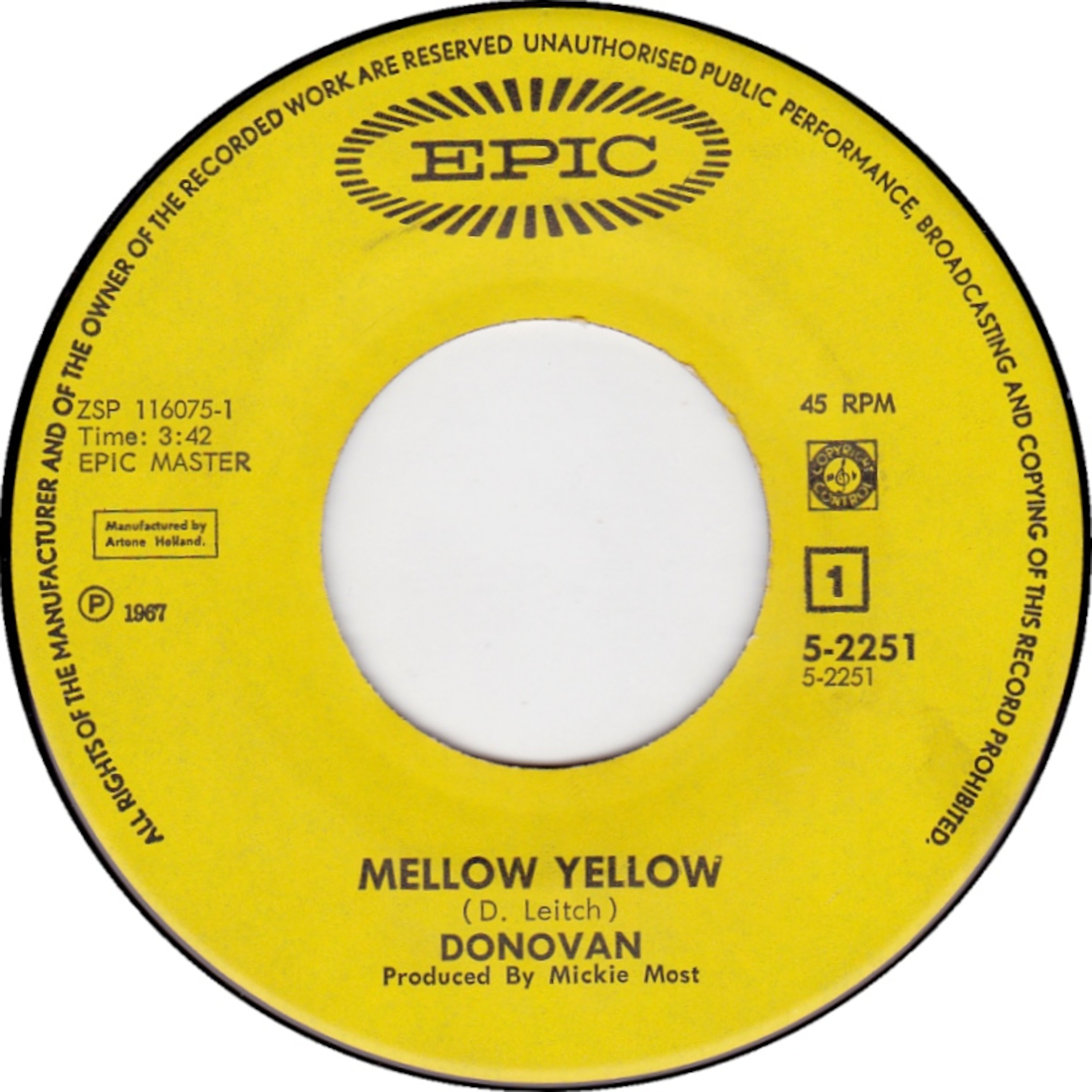
Donovan struck lucky a couple of times with this song: first, it was the beginning of people looking into the deeper meaning behind absolutely every lyric. Second, the song got a weird boost from a practical joke being played by an underground newspaper out of Berkeley.
Podcast: Play in new window | Download (Duration: 12:56 — 10.5MB)
 It was the late 1970s and Disco was finally making that transition out of the clubs, to be replaced by Hip-Hop or New Wave, depending on where you hung out. And the members of Blondie were at the forefront of the Hip-Hop movement, going to clubs and seeing performers freestyling in the streets.
When Fab Five Freddy suggested to Deborah Harry and Chris Klein that they should write a song about him, they thought it was a good idea and came up with a song that represented several “firsts” in the music industry:
Unfortunately for the band, it was also their last major chart success in the US, but it paved the way for a bunch of other artists to move forward with the genre.
Incidentally, I mentioned this during recording and it wound up being edited out, but the sax player on this record is none other than Tom Scott.
Around the same time this record came out, the Tom Tom Club was working on a rap track of their own, “Wordy Rappinghood”. However, neither group knew what the other was up to, because Blondie was working in New York City while the Tom Tom Club was in the Bahamas.
Your podcatcher should have this show downloaded, or ready to download, by now, but if you prefer to listen here or go the DIY route on the download, feel free to have at it using the player below.
And, of course, a positive rating wherever you get your podcasts warms my heart every time.
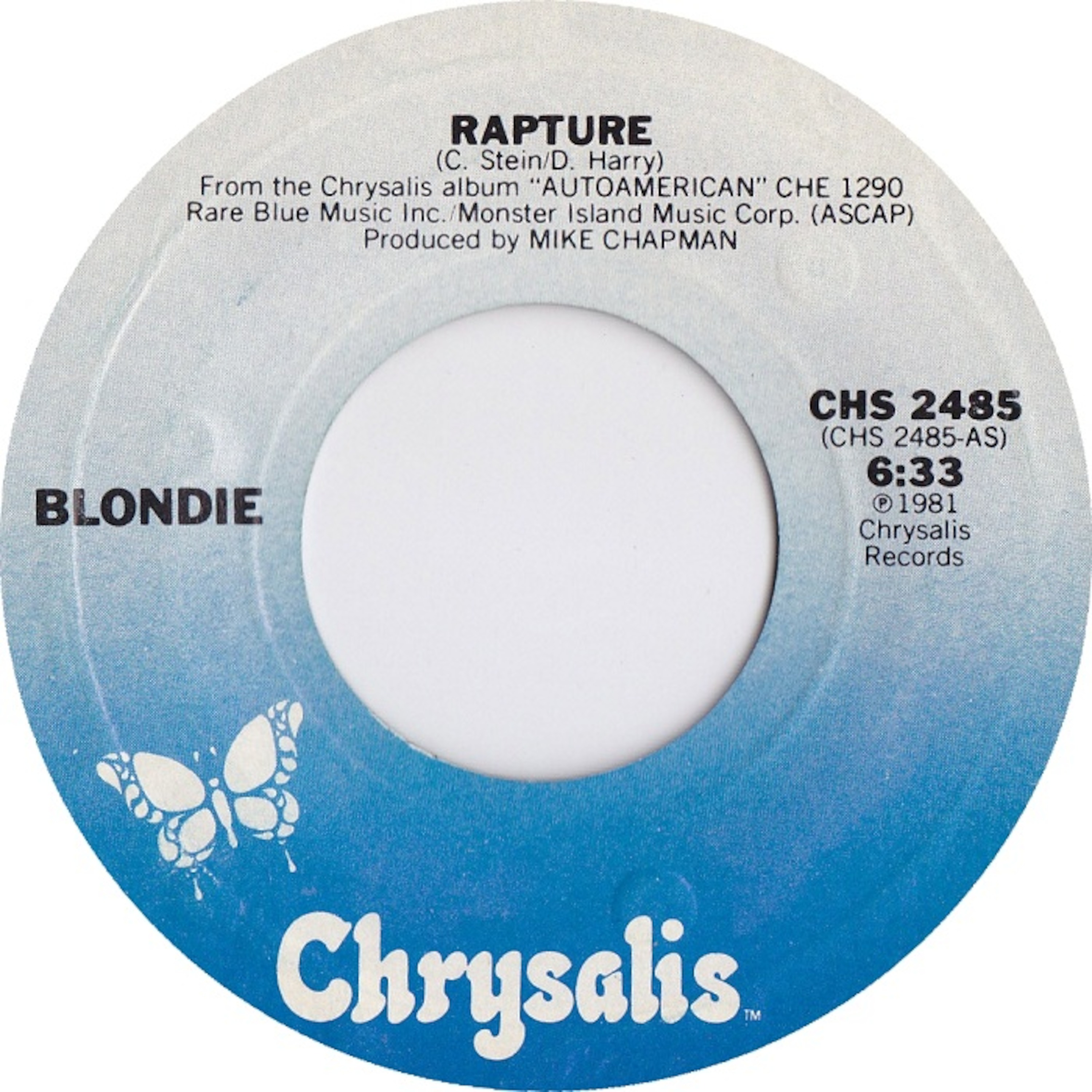
Disco was on its way out, to be replaced by Hip-Hop or New Wave, depending on the clubs you frequented. Blondie’s last major hit in the US was a track that departed from their previous style and broke a few barriers along the way.
Podcast: Play in new window | Download (Duration: 14:29 — 11.7MB)
 It was December of 1971 and Deep Purple was in Deep Trouble. They were all set to record their newest album, when the location they’d chosen for recording was accidentally set ablaze and burned completely to the ground.

It took a little scrambling, but they managed to locate a hotel that had closed for the season and were able to use it for recording. The only problem was, the mobile recording studio couldn’t be placed close to the recording space, so they had to run cables along walls, through a window, under a door, down a corridor, across a balcony, and who-knows-wherever else. This also meant that the band members had to traverse this route every time they wanted to hear their work played back. Ultimately they got tired of climbing all over the hotel and decided on-the-fly whether a particular take was any good.

The last song they recorded was one that they wrote pretty quickly, combined with an abandoned riff that Ritchie Blackmore had recorded without any particular project attached to it. It told the story of the fire, and the band’s travails in locating another place to record.
Deep Purple didn’t think the song had a lot of potential, but when they finally released it, it became one of rock and roll’s great iconic tunes, and a touchstone for novice guitar players everywhere. And the town of Montreux, where everything took place, commemorated the event with a memorial marker.
I have practically no doubt that your podcatcher software has the show by now, but if you’re the type to listen here on the page, or you like the whole DIY download thing, here’s your chance:
Podcast: Play in new window | Download (Duration: 18:45 — 15.1MB)
And I do ask that you take the time to leave a review in iTunes, or Google Podcasts, or Stitcher, or wherever finer podcasts are downloaded for you. Thanks so much!

By nearly all accounts, the Supremes were starting to look like a failure. Between 1961 and 1963, they had recorded six singles, five of them for Motown, and none of them reached the Billboard Top 40 chart. There was a glimmer of light when the song “When the Lovelight Starts Shining Through His Eyes” reached #23, but the act still wasn’t getting a lot of traction.
It wasn’t until the songwriting/producing team of Holland/Dozier/Holland (who also wrote “Lovelight”) wrote a song and produced a musical track for the Marvelettes, which the Marvelettes hated and refused to record. Desperate to get an artist to record a vocal (lest they be forced to pay for the musicians out of their own pockets), they managed to strong-arm the “No-Hit Supremes” into recording the song, even though the finished music track wasn’t in Diana Ross’ key. But the key change, and the bad attitude that the girls brought to the recording studio, was enough to turn the song into their first Number One hit, and that was the start of a string of chart toppers.
Surely, by now you know the drill: your podcast catcher should already have the song either downloaded, or ready to download. But if not, or if you prefer the Do It Yourself method, you can listen to/download the show right here:
Podcast: Play in new window | Download (Duration: 12:16 — 10.0MB)
And let me ask you to go to iTunes and say something nice about the show. The more decent ratings I get, the more visible the show becomes. Thanks so much for your support!
As I mentioned on the show last week, there won’t be a show this week because of a planned break. We have a big party at my place every year at this time. If you know where I live, come on down! The more the merrier!
Next week I have something pretty cool planned, and I hope I can get all the elements in place for it in a timely manner. If not, it’ll be two weeks hence.
In the meantime: if you haven’t done so already, go check out and click “Like” on the show’s Facebook page.
And you can go follow the show on Twitter.
And, of course, please leave a review of some kind wherever you get your podcasts from, whether it’s Podcast Republic, iTunes, Stitcher, Podomatic or whatever. Every little bit helps me grow the show.
Hey! I re-did the webpage! What do you think? Please to leave comments here.
Thanks so much for your support and I’ll talk to you on the 21st.