In an effort to make the show as a whole more compliant with the Americans with Disabilities Act (and, let’s face it, to make it more visible to search engines), transcripts of each show will now be available.
As it happens, because the show is heavily scripted, and because I’m weirdly obsessive about saving digital stuff, I still have the original Microsoft Word files for most episodes. I lost a few to accidental overwrites, but I’ll figure something out for those shows as well.
So, beginning this week when the show returns for Episode 53, there will be a transcript linked from the episode’s blog post. In addition, I’ll be backfilling the older episodes over the next couple of weeks until everything is caught up.
As I mentioned last week, the show is taking a brief break so that I can get a little bit ahead of the production curve.
Work has been extra-crazy this month, and life has thrown a few curveballs our way, and it’s pushed me into a place where I’m killing myself to put together a show that, ultimately, isn’t as good as what I’ve gotten used to producing here so far. And it arrives late, besides. That’s not fair to me OR to you.
So go play catchup if you’re a new listener, and the show will be back on October 13 when I take a look at ‘Both Sides Now.” See you then!
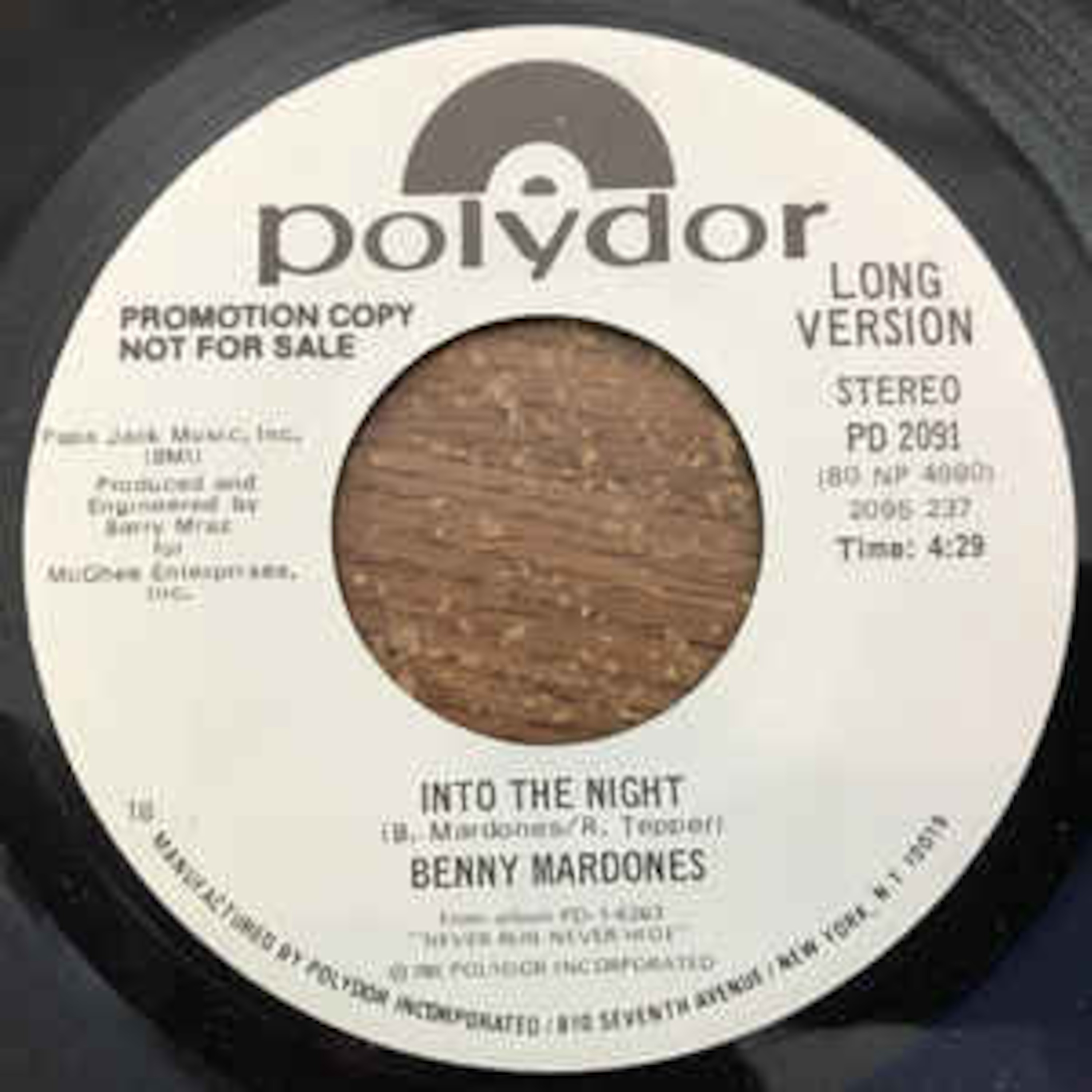
In 1978, Benny Mardones was a struggling singer-songwriter whose first album tanked partially because the label went bankrupt shortly after it was released. In fact, it remained out of print until 2012, when another label got ahold of it and released it on compact disc.
The story goes that Benny was living in an apartment in the Spanish Harlem neighborhood of Manhattan, and there was a family in the building that was on hard times, so he helped support them, in part by paying their 16-year-old daughter Heidi the sum of $50 a week to walk his dog.
As they got close to finishing his second album (and the first for his new label), Benny and his writing partner were working out a song when Heidi came through the door to get the dog. It was then that they realized they’d been working all night long, and the partner’s response to Heidi’s presence inspired the opening line to the song.
A rotary payphone flying through a bluescreen sky while a guy with feathered hair sings. Is there anything more 1979 than this image? If there is, I do NOT want to know about it.
And, as the story goes, the rest of the song is Mardones trying to express his deep affection for the Heidi and her family despite all the bad stuff that’s happened to them. And there’s a certain recognition that his success isn’t necessarily their success. Now, that’s pretty much the story that Mardones has told repeatedly, and I guess you can believe him, but it also makes you wonder why he agreed to the plotline that appears in the video, which makes him look like a middle-aged guy creeping on a teeny bopper (who, incidentally, has exactly one facial expression throughout the video).
The song made it to Number 11 in 1980, and again in 1989, putting in 37 non-consecutive weeks on the charts, the second-largest number of weeks on the Billboard Hot 100 in the 1980s, but not even close to the all-time record (I’ll let you Google it, the answer is kind of depressing).
Anyway, your Podcast Republic app should already have this show captured, but if you’re a Ron Swanson type who does things the hard way, well then feel free to listen or download it from right here.
And, of course, any and all feedback is all kinds of welcome.
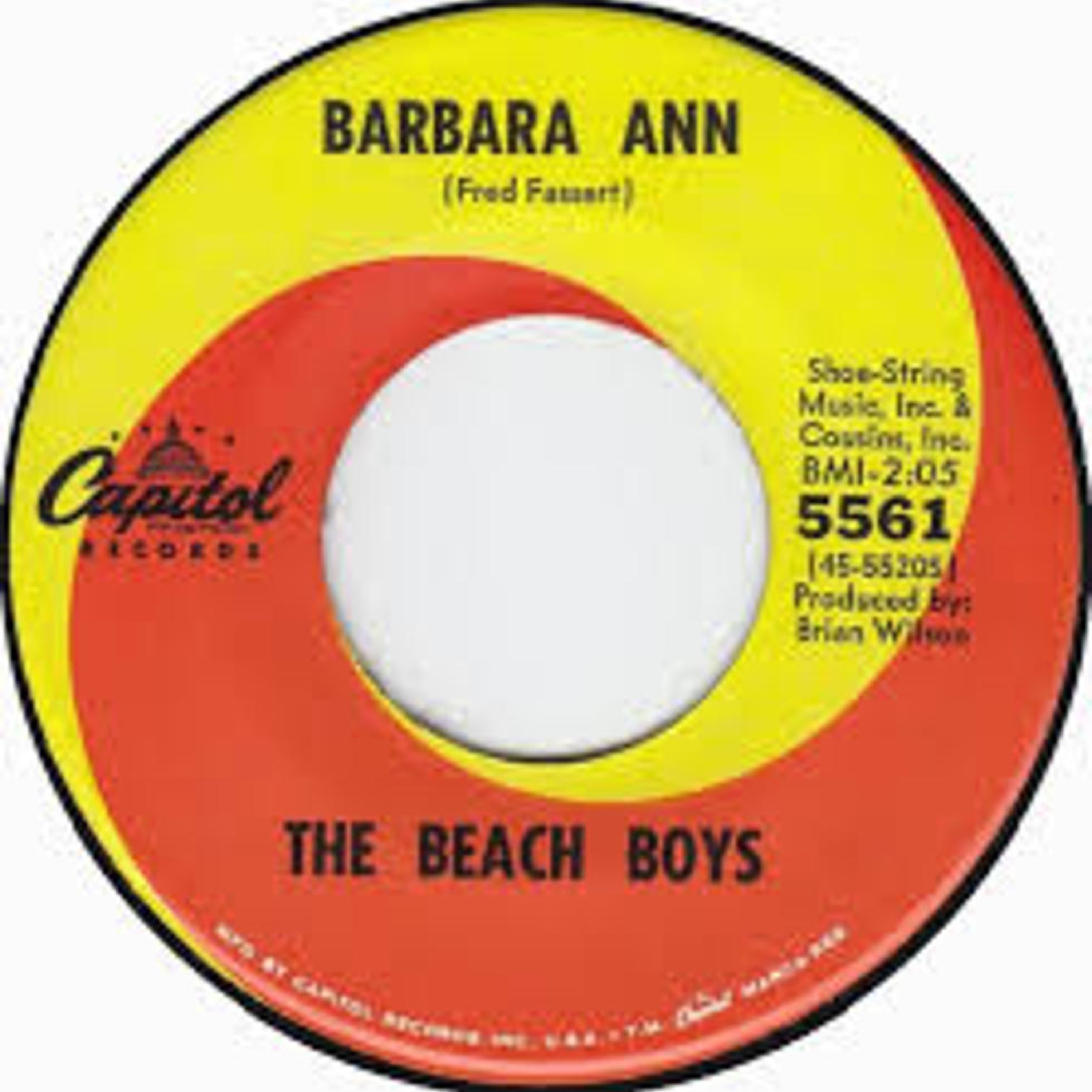
The year was 1958, and a guy named Fred Fassert wrote a song about his sister. Guess what her name was? I’m sure you know it was Norma Jean.
Ha, Ha! Just kidding! It was Barbara Ann! But I’m pretty sure the title of the post gave that away.
And now that I think about it, and all the girls named Barbara who had to put up with people singing that song at them, I’m not entirely convinced that he didn’t write the song to needle her just a little bit.
Anyway, he and the rest of his group, the Regents, recorded the song but they couldn’t get a label to distribute it, so they eventually broke up.
Three years later, a record distributor in New York picked up the recording and released it locally, where it became a hit in the NY Metro area. That distributor, in turn, leased the recording to Gee Records, which sent it nationwide and it became a #13 song for a band that no longer existed (and where have we heard that one before?)
Even the party pictures were faked. How about that!
A couple of years after that, the Beach Boys, under pressure to record something for Christmas 1965, put together a “party” album that was carefully crafted to sound like a spontaneous get-together, and they recorded a bunch of older songs that they happened to like. One of them was the old Regents tune, and they got Dean Torrence (of Jan & Dean) to sing lead. The tune closed out the album, and when radio stations started playing it, Capitol rushed out a single version of the record.
There’s more to the story, but if I tell it all here then you won’t listen to the podcast, and I can’t have that. So go check out your podcatcher, or listen/download through the player below.
And, as usual, please take a moment to leave a comment here, or a review wherever you get your podcasts from.
The Billboard Hot 100 chart has been around for about 60 years. In all that time, only seven songs which weren’t recorded in English have made it to the Number One position. And there are several other foreign-language songs which enjoyed plenty of popularity without making it to the top spot, but the fact is, in United States it’s tough to score a hit if your song isn’t in English.
So this week I tried to come up with a comprehensive list of non-English songs that made it to the Top 20. This definitely became a case of “the more you find, the more there is to find” so I’m not at all sure I caught everything, but it’s a pretty good list, and at over 18 minutes, it’s an overstuffed episode besides.
I think that some of the songs that didn’t make Number One are going to be a surprise to you, but a couple of the ones that did, may also be surprising. And there’s one artist who actually hit the Top Five twice, with songs that aren’t in English. And no, it’s not Dean Martin. I shan’t spoil it here, but I will say that this one really knocked me out.
By now your podcatcher may have located this show, but if you’re content to listen or download it from right here, be my guest:
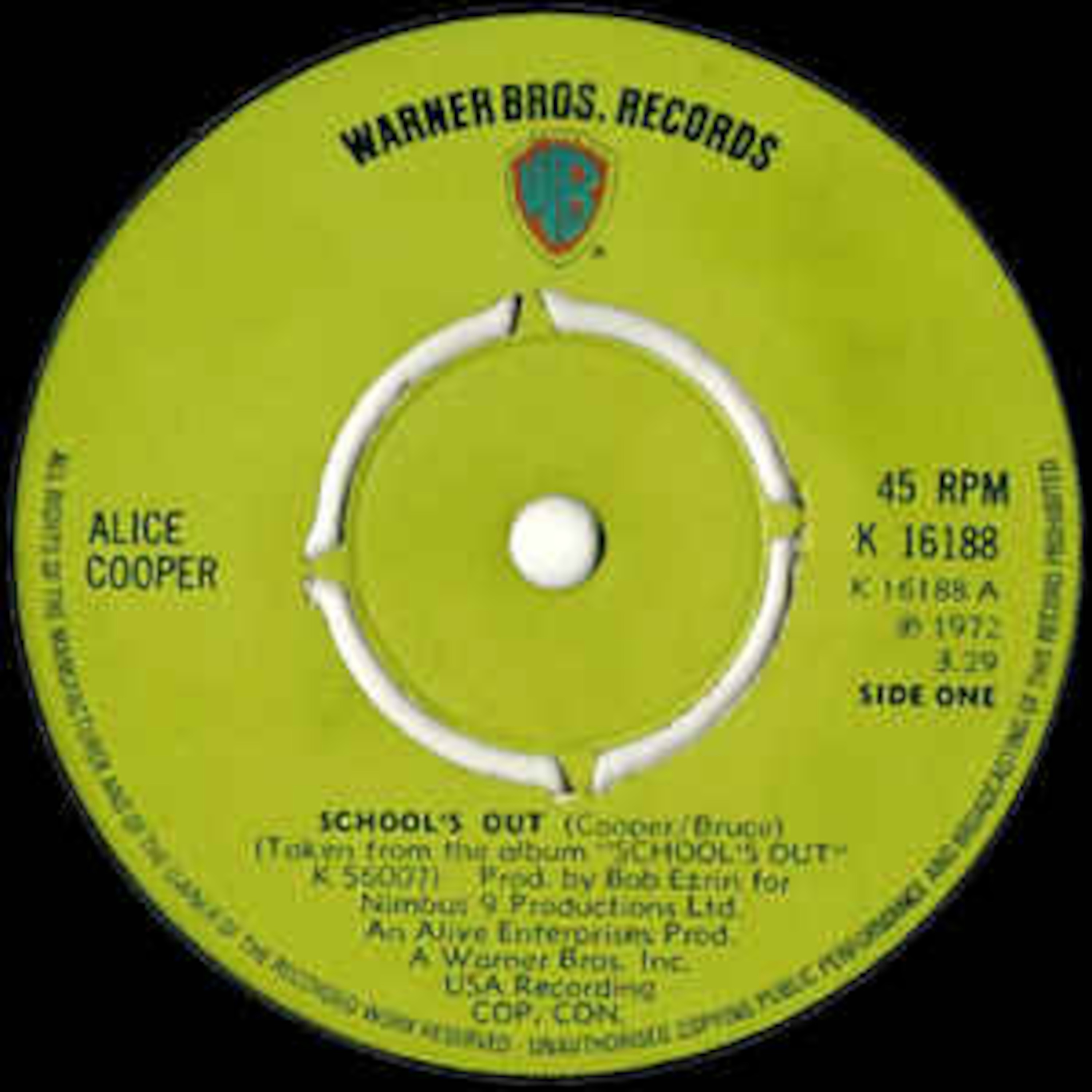
Alice Cooper (the band, not the guy) had released two albums without much success, so they turned their backs on Los Angeles and went to Detroit (as you do, I guess), where the people were already listening to stuff similar to their own. It was during that time that Alice Cooper (the guy, not the band) found himself watching an old Bowery Boys movie and he liked something that one of the characters had said.
From that he came up with the song that made Alice Cooper (the band, not the guy) the kings of summertime, and gave Alice Cooper (the guy, not the band) a good reason to declare himself “the Francis Scott Key of summer.
This is the album’s cover, with the band inscriptions. You can see this desk in the Hard Rock Cafe in Las Vegas these days. This is the album with the paper panties that a bunch of copies had inside, instead of a plain inner sleeve. A copy in decent shape is worth a couple of hundred dollars on eBay or other online sites.
As usual, your podcatcher is so clever that it’s probably found the file already, but if not you can click on the player below to download it yourself, or just listen right here.
And, of course, a kind word wherever you get your podcast needs filled would be a beautiful thing.
First off: let me both thank, and apologize to, Jerry Bainbridge for his efforts this week. He voice-tracked the show for me this week in an effort to keep it from dropping too late, but a technical issue prevented me from using the material he’d given me. I do plan to ask him again in the near future, and I hope he’ll be kind enough to step up again then.
I’ve been spending time the past couple of weeks running up and down the coast between Baltimore and Myrtle Beach, South Carolina, preparing a condo for rental, and believe it or not this show is the most relaxing thing I’ve done the whole time. And it was a nightmare to assemble. I’m going back to late-night recording!
This week, we’re looking at songs that did well on the charts, perhaps well enough that people have forgotten that there’s an earlier version. And I think at least one of them will come as a surprise to you. Maybe two of them. Hey, maybe all of them!
I’m sure you know how it goes at this point. Your podcast catcher should have picked it up automatically, but if you’re the DIY type, then by all means feel free to play or download the show through the player below:
And, of course, please take the time to leave a review in whatever website or app you happen to be listening through.
Cookie Consent
We use cookies to improve your experience on our site. By using our site, you consent to cookies.
Contains information related to marketing campaigns of the user. These are shared with Google AdWords / Google Ads when the Google Ads and Google Analytics accounts are linked together.
90 days
__utma
ID used to identify users and sessions
2 years after last activity
__utmt
Used to monitor number of Google Analytics server requests
10 minutes
__utmb
Used to distinguish new sessions and visits. This cookie is set when the GA.js javascript library is loaded and there is no existing __utmb cookie. The cookie is updated every time data is sent to the Google Analytics server.
30 minutes after last activity
__utmc
Used only with old Urchin versions of Google Analytics and not with GA.js. Was used to distinguish between new sessions and visits at the end of a session.
End of session (browser)
__utmz
Contains information about the traffic source or campaign that directed user to the website. The cookie is set when the GA.js javascript is loaded and updated when data is sent to the Google Anaytics server
6 months after last activity
__utmv
Contains custom information set by the web developer via the _setCustomVar method in Google Analytics. This cookie is updated every time new data is sent to the Google Analytics server.
2 years after last activity
__utmx
Used to determine whether a user is included in an A / B or Multivariate test.
18 months
_ga
ID used to identify users
2 years
_gali
Used by Google Analytics to determine which links on a page are being clicked
30 seconds
_ga_
ID used to identify users
2 years
_gid
ID used to identify users for 24 hours after last activity
24 hours
_gat
Used to monitor number of Google Analytics server requests when using Google Tag Manager
1 minute
Marketing cookies are used to follow visitors to websites. The intention is to show ads that are relevant and engaging to the individual user.
Facebook Pixel is a web analytics service that tracks and reports website traffic.
Registers a unique ID on mobile devices to enable tracking based on geographical GPS location.
1 day
VISITOR_INFO1_LIVE
Tries to estimate the users' bandwidth on pages with integrated YouTube videos. Also used for marketing
179 days
PREF
This cookie stores your preferences and other information, in particular preferred language, how many search results you wish to be shown on your page, and whether or not you wish to have Google’s SafeSearch filter turned on.
10 years from set/ update
YSC
Registers a unique ID to keep statistics of what videos from YouTube the user has seen.
Session
DEVICE_INFO
Used to detect if the visitor has accepted the marketing category in the cookie banner. This cookie is necessary for GDPR-compliance of the website.
179 days
LOGIN_INFO
This cookie is used to play YouTube videos embedded on the website.