In the mid 1960s, a group called The Detergents released an album of novelty songs, and a couple of them caught on, but one did especially well, a parody of the Shangri-Las’ “Leader of the Pack.” Among that group was a young man named Ron Dante.
A few years later, Dante was chosen to be the lead voice for a fictional band that was tied in with a cartoon series. That band was The Archies, and they had a short string of hits, peaking with “Sugar Sugar” in 1969. Dante provided all the male voices on “Sugar Sugar,” and Toni Wine provided all the female voices. So yes, you appear to hear two women—one singing low and the other singing high—but in fact they’re both Toni Wine.
Wine left the group around the time “Sugar Sugar” became a hit, and the female portion of The Archies’ follow-up single was voiced by someone else. You’ll just have to listen in to find out who that was.
The Archies, around the “Sugar Sugar” era. From Left to right: Toni Wine, Ron Dante, Jeff Barry, Hot Dog (taking a break from conducting), Ron Dante, Toni Wine. Heh.
If your favorite podcast software doesn’t have it for you already, you can always click below to listen to/download this week’s episode.
There’s no doubt that Jerry Lee Lewis was a huge influence on the early days of rock and roll. There’s also no doubt that when he married an underage relative, he pretty much torpedoed his hitmaking career.
But his star burned brightly for a little while, and while the jokes continued, he did manage to restore his reputation, and his influence on the genre is undeniable. Elvis Presley once said that if he could play piano like Jerry Lee Lewis, he’d give up singing. And Elton John once said that hearing “Great Balls of Fire” was the first time he’d heard someone “beat the shit out of a piano.” This time around, however, we’re looking at his first hit, “Whole Lotta Shakin’ Goin’ On”, which has a bit of a checkered past before Jerry Lee got his hands on it. Maybe that’s what made it attractive to him, hm?
Jerry Lee Lewis is enshrined as one of the inaugural inductees to the Rock and Roll Hall of Fame, and it’s a well-deserved place for him to be.
As usual, if your podcatcher isn’t catching pods today, or if you don’t use one, you can always click on the player below to listen and/or download.
In 1957, Jerry Lee Lewis finally broke out of his role as a session musician at Sun Records, with a song that taught pretty much everyone that there’s another way to play the piano.
In November of 1975, an ore freighter broke apart and went down very suddenly in a storm on Lake Superior. Singer Gordon Lightfoot thought that the story wasn’t getting enough attention and gathered some news clippings together, then used that material to write a song about the event.
This is the original article from Newsweek’s November 24, 1975 article.
The song was recorded within just a few weeks of the tragedy, and was released the following summer. Just a few days after the first anniversary of the sinking, the song hit Number One on the Canadian charts, and peaked at #2 in the US. I have to admit, though, that when the song came out, 13-year-old me had no idea that it was about a recent event. I figured it was either fictional, or it had happened many years ago. Imagine my surprise!
One of the last dives. The bell has been replaced, and someone is in the pilot house, leaving a can of beer there.
Nowadays, the ship’s location is considered mostly off-limits to all recreational diving and most research dives or equipment, now. It’s also located in a spot in Lake Superior where the border between the United States and Canada has moved several times, now. Right now the ship is on the Canadian side.
What’s that, you say? Your podcatcher hasn’t picked up the show yet? Don’t worry, you can listen to or download it by clicking on the player below. In addition, I hear it’s now available on Google Play, so you can use that if you like. I’m still working on Spotify, but they’re taking their time about it.
EDITED TO ADD: Holy cow, I can’t believe I forgot to post the video of the ship’s launching. There’s no audio, more’s the pity. If you’ve never seen a sideways ship launch before, you’re in for a treat because it’s pretty cool in general. The action starts at about three minutes in.
I realize it’s not fashionable to bash the teenagers these days, however in my head this one actually deserves the abuse. Most of you may not agree, but I’m gonna say my piece anyway and be done with it.
Rosalie Mendez Hamlin was just a young teenager when she joined a band and they recorded their only hit record in 1960, in a converted airplane hangar. But by the time the song hit the charts, the band had broken up and Rosie was just starting a decades-long fight to get credit for writing the song, and to get the royalties she deserved. One of the things that broke in her favor as part of the legal actions she needed to take was the fact that she’d mailed a copy of the song to herself. It’s not an iron-clad way of enforcing a simple copyright, but it did turn out to be a shrewd move on her part.
Both “Angel Baby” and its B-Side, a track sung by a friend of the band who happened to be there for the session, are just plain bad recordings. As musicians, The Originals were not what you’d call virtuosos. As Max Bialystock says in The Producers, “I picked the wrong play, the wrong director, the wrong cast. Where did I go right?”
Here’s the B-Side. See if you don’t agree:
But I think that the raw, unpolished sound of “Angel Baby” may be part of its appeal. It was only a couple of years later that genuine garage bands dropped off the landscape, and among bands with that kind of sound, this one stands out as more of a prom theme than a party-all-night tune.
As usual, your podcast catcher should have captured this episode by now (ooh! It’s available at Google Play now!), but if not, feel free to click the player below for listening or downloading.
Next week we look at a different kind of disaster.
By the time Rosie and the Originals’ only hit reached the Billboard charts, the band had already broken up, and Rosie herself was just beginning a decades-long battle for royalties. And the record isn’t even that good; I’ll fight you over that one.
As I mentioned during last week’s show, the podcast is taking two weeks off so I can have some actual vacation time. But don’t worry! I’m still writing material (getting ahead of the curve? Let’s not count on that too heavily), and on April 7 I’ll be back with a new episode, in which I take the time to defend a song that I generally consider to be indefensible. Tune in for that bit of fun!
It was originally spelled “Rock-In Robin,” which is a distinction that’s too tedious to elucidate verbally, and it was Bobby Day’s biggest hit. But while Bobby was known for his songwriting, he didn’t write this one.
It was written by songwriter and record executive Leon René, and for some reason he let the song lapse into the public domain, so I guess he wasn’t such a hot executive. Anyway, that means if you want to cut your own record, or maybe record a version for background music to enhance a project you’re doing, have at it! Change the words? No problem! You don’t need anyone’s permission! The caveat, however, is that you have to come up with your own recording. Use an existing one, and you’re almost certainly infringing on a copyright.
If your favorite podcast catcher hasn’t found this week’s episode yet, there’s always the player below, from which you can listen or download for your future listening pleasure.
And, as usual, leaving a rating in your favorite software is always appreciated. Which reminds me: I didn’t realize that the show wasn’t available via Spotify; that should be fixed within the next couple of days.
The Righteous Brothers were originally part of a larger group called The Paramours. In 1962 they split up, and members Bill Medley and Bobby Hatfield began appearing in local clubs in southern California as a duo. One night, when they finished singing a song, a Marine from a nearby base shouted at them, “That was righteous, brother.” When they were signed to Moonglow Records shortly thereafter, they were asked to come up with a name for the act, and they recalled that incident. “Righteous Brothers” sounded about right for them so they ran with it.
About two years later, they were playing in a show at San Francisco’s Cow Palace, where a record producer was conducting the band. That conductor was Phil Spector, who was looking to add some male voices to his Phillies label. Spector’s first move was to hire Barry Mann and Cynthia Weil to write a song specifically for his new act. “You’ve Lost That Lovin’ Feeling” was the result of that hire.
I’ve seen two different versions of the ad. Most of the descriptions mention the plug for Ready Steady Go!, as this one does, but there’s another version that doesn’t have the plug but does feature Oldham’s actual signature at the bottom. I’m not sure which one is the real one, but this is the one that doesn’t require me to pay a fee.
Shortly after the record was released, the Beatles’ producer, George Martin, got Cilla Black to rush-record a cover for quick release. It started to out-pace the Righteous Brothers’ version, until two things happened: first, the label caught wise to what was going on and flew the Righteous Brothers to the UK for a week-long publicity tour that included some TV appearances. Meanwhile, Andrew Oldham, the manager for the Rolling Stones, spent his own money to promote the version from across the pond. In short order, the American version was topping the UK charts, and Cilla Black’s was dropping rapidly.
Naturally, if you iTunes or some such, you’ve already got this in your library. But if you don’t, you can click on the player below to listen or download.
Oh—and, as promised in the last post, here’s a photo of my basement studio:
The laptop on the left holds my audio elements while the one on the right is my “everyday” machine that I use for recording. The Audacity file you’re looking at is the unedited, unprocessed (via Auphonic) version of this week’s show. You can see I use two mice; one is wireless and the other one isn’t. The wired one is the one that I use for the left-hand machine, because it gives me (I think) more control and that’s where I really need it.
There’s another panel of foam squares just out of frame to the left, and a third one behind me. My mic is on a boom that’s clamped to the table. And that’s my script between the computers and resting on both keyboards.
Hope you liked the tour!
Cookie Consent
We use cookies to improve your experience on our site. By using our site, you consent to cookies.
Contains information related to marketing campaigns of the user. These are shared with Google AdWords / Google Ads when the Google Ads and Google Analytics accounts are linked together.
90 days
__utma
ID used to identify users and sessions
2 years after last activity
__utmt
Used to monitor number of Google Analytics server requests
10 minutes
__utmb
Used to distinguish new sessions and visits. This cookie is set when the GA.js javascript library is loaded and there is no existing __utmb cookie. The cookie is updated every time data is sent to the Google Analytics server.
30 minutes after last activity
__utmc
Used only with old Urchin versions of Google Analytics and not with GA.js. Was used to distinguish between new sessions and visits at the end of a session.
End of session (browser)
__utmz
Contains information about the traffic source or campaign that directed user to the website. The cookie is set when the GA.js javascript is loaded and updated when data is sent to the Google Anaytics server
6 months after last activity
__utmv
Contains custom information set by the web developer via the _setCustomVar method in Google Analytics. This cookie is updated every time new data is sent to the Google Analytics server.
2 years after last activity
__utmx
Used to determine whether a user is included in an A / B or Multivariate test.
18 months
_ga
ID used to identify users
2 years
_gali
Used by Google Analytics to determine which links on a page are being clicked
30 seconds
_ga_
ID used to identify users
2 years
_gid
ID used to identify users for 24 hours after last activity
24 hours
_gat
Used to monitor number of Google Analytics server requests when using Google Tag Manager
1 minute
Marketing cookies are used to follow visitors to websites. The intention is to show ads that are relevant and engaging to the individual user.
Facebook Pixel is a web analytics service that tracks and reports website traffic.
Registers a unique ID on mobile devices to enable tracking based on geographical GPS location.
1 day
VISITOR_INFO1_LIVE
Tries to estimate the users' bandwidth on pages with integrated YouTube videos. Also used for marketing
179 days
PREF
This cookie stores your preferences and other information, in particular preferred language, how many search results you wish to be shown on your page, and whether or not you wish to have Google’s SafeSearch filter turned on.
10 years from set/ update
YSC
Registers a unique ID to keep statistics of what videos from YouTube the user has seen.
Session
DEVICE_INFO
Used to detect if the visitor has accepted the marketing category in the cookie banner. This cookie is necessary for GDPR-compliance of the website.
179 days
LOGIN_INFO
This cookie is used to play YouTube videos embedded on the website.


 In the mid 1960s, a group called The Detergents released an album of novelty songs, and a couple of them caught on, but one did especially well, a parody of the Shangri-Las’ “Leader of the Pack.” Among that group was a young man named Ron Dante.
 Archies, and they had a short string of hits, peaking with “Sugar Sugar” in 1969. Dante provided all the male voices on “Sugar Sugar,” and Toni Wine provided all the female voices. So yes, you appear to hear two women—one singing low and the other singing high—but in fact they’re both Toni Wine.
 There’s no doubt that Jerry Lee Lewis was a huge influence on the early days of rock and roll. There’s also no doubt that when he married an underage relative, he pretty much torpedoed his hitmaking career.
 This time around, however, we’re looking at his first hit, “Whole Lotta Shakin’ Goin’ On”, which has a bit of a checkered past before Jerry Lee got his hands on it. Maybe that’s what made it attractive to him, hm?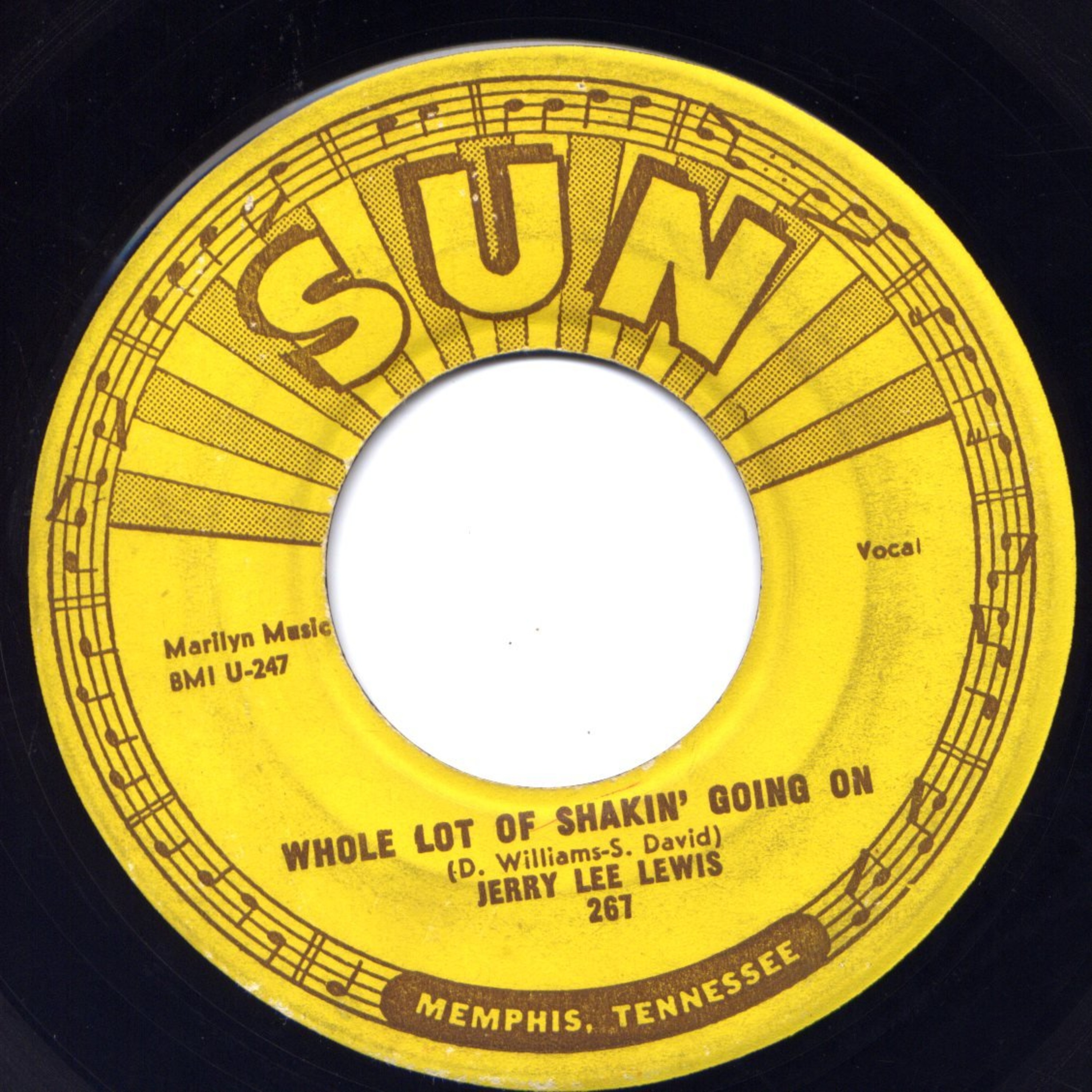

 The song was recorded within just a few weeks of the tragedy, and was released the following summer. Just a few days after the first anniversary of the sinking, the song hit Number One on the Canadian charts, and peaked at #2 in the US. I have to admit, though, that when the song came out, 13-year-old me had no idea that it was about a recent event. I figured it was either fictional, or it had happened many years ago. Imagine my surprise!
 I realize it’s not fashionable to bash the teenagers these days, however in my head this one actually deserves the abuse. Most of you may not agree, but I’m gonna say my piece anyway and be done with it.
 Both “Angel Baby” and its B-Side, a track sung by a friend of the band who happened to be there for the session, are just plain bad recordings. As musicians, The Originals were not what you’d call virtuosos. As Max Bialystock says in The Producers, “I picked the wrong play, the wrong director, the wrong cast. Where did I go right?”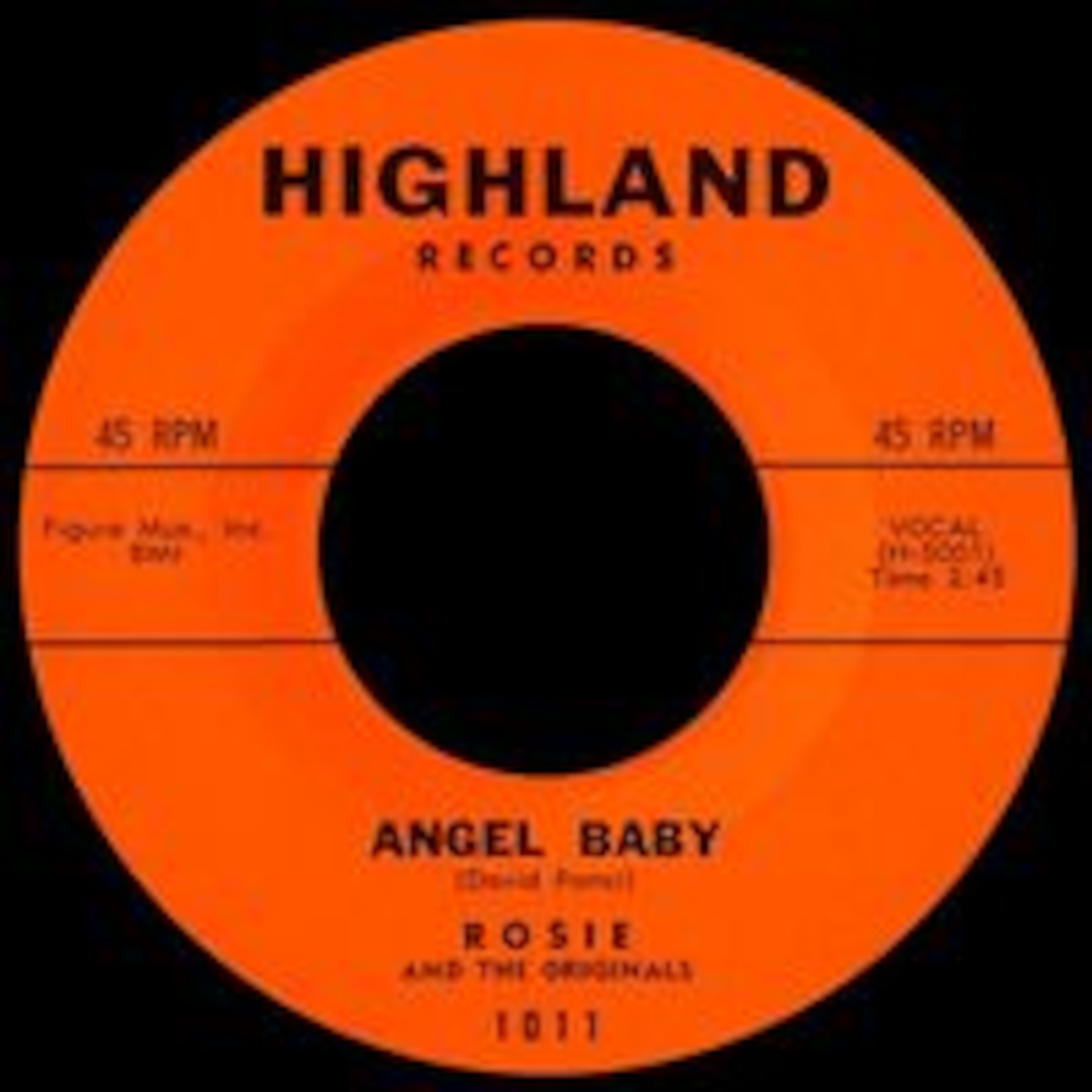
 As I mentioned during last week’s show, the podcast is taking two weeks off so I can have some actual vacation time. But don’t worry! I’m still writing material (getting ahead of the curve? Let’s not count on that too heavily), and on April 7 I’ll be back with a new episode, in which I take the time to defend a song that I generally consider to be indefensible. Tune in for that bit of fun!
 It was originally spelled “Rock-In Robin,” which is a distinction that’s too tedious to elucidate verbally, and it was Bobby Day’s biggest hit. But while Bobby was known for his songwriting, he didn’t write this one.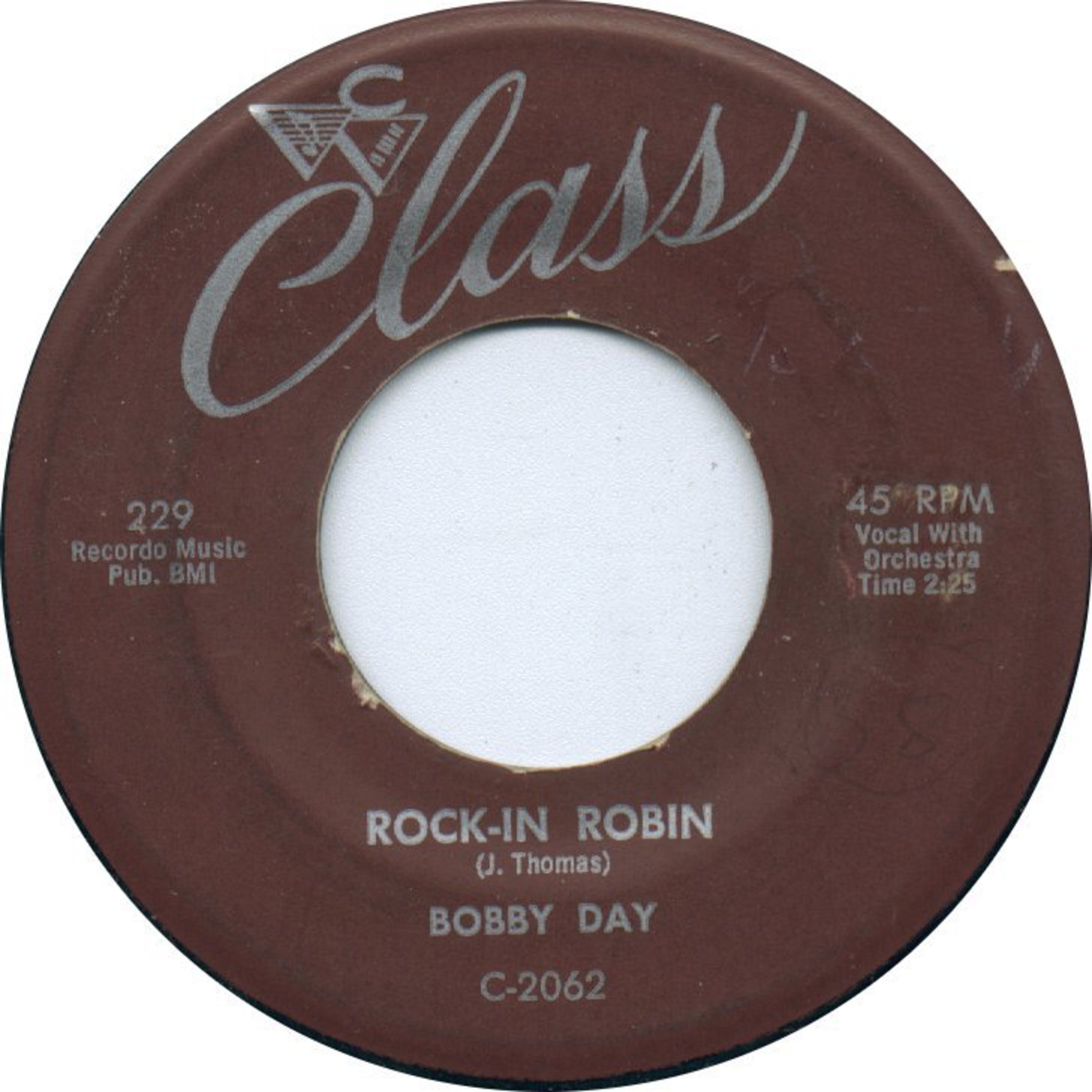
 The Righteous Brothers were originally part of a larger group called The Paramours. In 1962 they split up, and members Bill Medley and Bobby Hatfield began appearing in local clubs in southern California as a duo. One night, when they finished singing a song, a Marine from a nearby base shouted at them, “That was righteous, brother.” When they were signed to Moonglow Records shortly thereafter, they were asked to come up with a name for the act, and they recalled that incident. “Righteous Brothers” sounded about right for them so they ran with it.
 About two years later, they were playing in a show at San Francisco’s Cow Palace, where a record producer was conducting the band. That conductor was Phil Spector, who was looking to add some male voices to his Phillies label. Spector’s first move was to hire Barry Mann and Cynthia Weil to write a song specifically for his new act. “You’ve Lost That Lovin’ Feeling” was the result of that hire.
 The laptop on the left holds my audio elements while the one on the right is my “everyday” machine that I use for recording. The Audacity file you’re looking at is the unedited, unprocessed (via Auphonic) version of this week’s show. You can see I use two mice; one is wireless and the other one isn’t. The wired one is the one that I use for the left-hand machine, because it gives me (I think) more control and that’s where I really need it.