Over the last couple of days I’ve done some nostalgic listening to some stuff I hadn’t heard in awhile.
Y’ever do that? You’re listening to something you haven’t heard in awhile, and you’re like, “Holy COW! Why am I not listening to that more often?”
Last week it was Lucinda Williams’ album World Without Tears. I came back to it when I stumbled over my own review for it on Amazon.com. that album was my entry to her stuff, and it’s amazingly beautiful and raw. Go listen to it however you can. Better yet, I’ll make it easy for you. The first track is supposed to sound warbly at first:
The other one I came back to after finding a copy of the vinyl in a consignment store recently. I was having trouble uploading this week’s episode to Podomatic, and I decided to listen to music while I was noodling it over. So I dug this out and threw it on the turntable:
Apologies for the delay; I’m powering through a wicked chest cold, and then my podcasting host was giving me the blues about the audio file, so I eventually had to upload in a different format. I do hope this doesn’t affect your listening experience. Please let me know if it does!
By request:
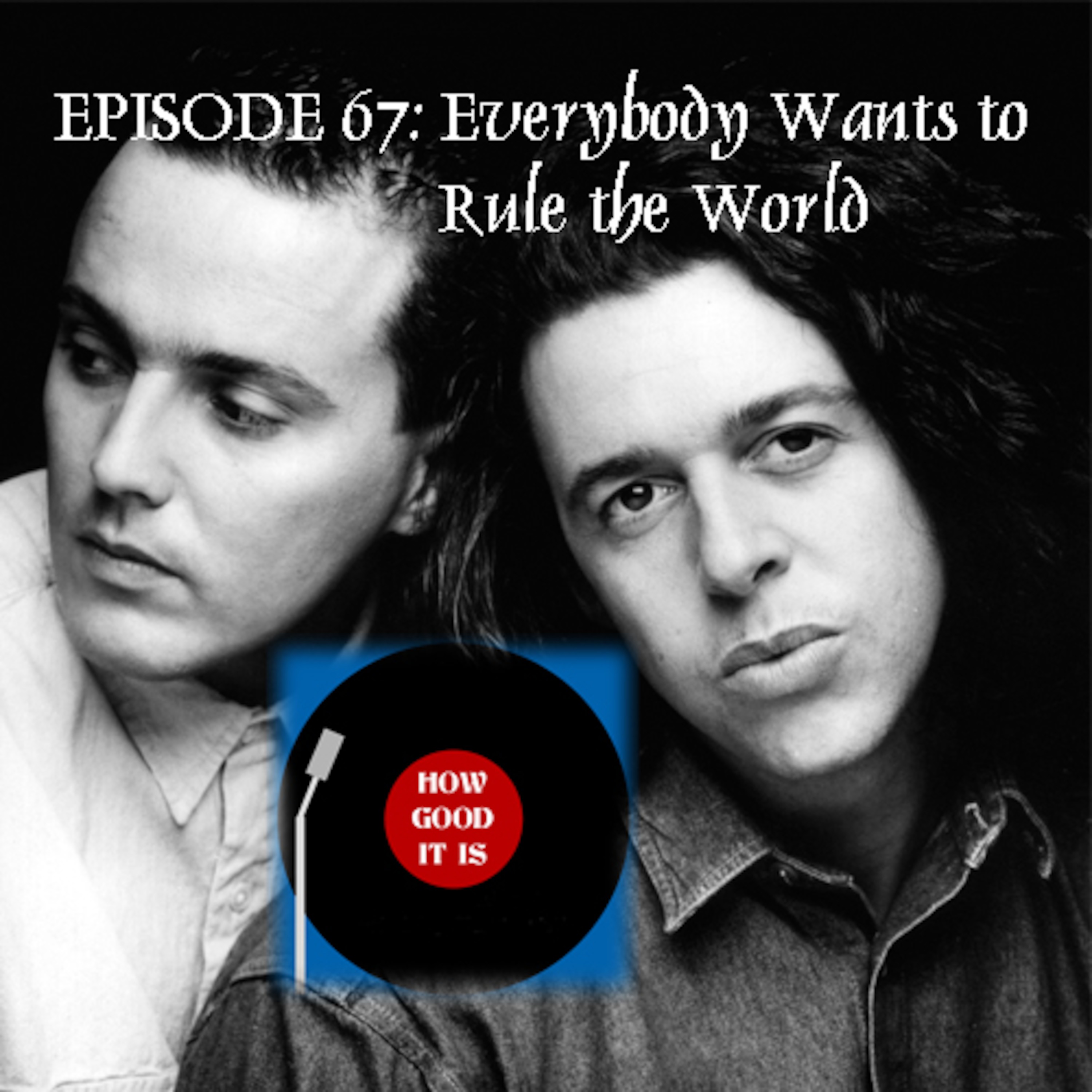
Tears For Fears–specifically founders Curt Smith and Roland Orzabal–had been kicking around the music scene in the UK for a couple of years, and even had a pretty popular album over there before most people in the United States had even heard of them. (Which reminds me: yes, the story I tell about meeting Curt Smith is true. What I didn’t know at the time was that he was doing Seeds of Love publicity stuff solo because he and Orzabal had temporarily broken up the band.)
Even when it came time for the band to release a single in the United States, the label interceded and suggested that while “Shout” was a perfectly good song, it wouldn’t make for a very good debut song. They turned out to be right, and “Shout” was saved for later on, a move that turned the Songs from the Big Chair album, and Tears for Fears, into a huge success.
There’s more to the story, of course, but why waste it here when you can put it in your head? Either your podcatcher has it, or you’re gonna listen to/download it from here:
No episode next week; I’m taking a planned break. In two weeks, we’ll dig on some early Linda Ronstadt.
And of course, comments, tweets, FB notes, Instas–whatever. I love hearing from you!
David Bowie had already released ten albums by 1976, and he was starting to feel the effects of burnout and a heavy cocaine habit. So where did he go to escape his drug habit? To the world’s Heroin capital, of course: Berlin!
Fortunately for Bowie and ultimately his fans, Heroin wasn’t really his thing, and he not only managed to get healthy, but he also managed to find some creative juice in that city. He wrote, or co-wrote, material for three albums, although only the second one was recorded mostly in Berlin. Those albums today are called the Berlin Trio, or sometimes the Berlin Triptych. They didn’t get a ton of love at the time, largely because Bowie was Bowie and he was streets ahead of everyone else. But “Heroes,” the title track from the second album, grew in stature and in its level of meaning for fans everywhere.
OK, so I promised you a few videos during the show. The first one is his first time performing the song on TV, on the Marc Bolan show. The instrumentation is clearly different but I think he’s singing live-to-track:
The second video is the warm-up to the third. If you’ve seen this one, you can just skip down to the next one. But a lot of people have heard the song without seeing the nearly two minutes of awkwardness that preceded it:
It was for that holiday special that Bowie produced this video, which also appears to be a live-to-track recording, with some extra echo and those extra fun pantomime moves.
But while all that’s fun, it’s probably not what you came looking for. This is probably what you came looking for:
Kansas was literally on the last day of rehearsing for their fifth album when their producer asked them if they had anything else. Guitarist and songwriter Kerry Livgren reluctantly broke out an acoustic song that he was convinced the rest of the band would hate, because it was practically the opposite of everything Kansas had done until then. But it turned out to be exactly the opposite: they loved it, and they fine-tuned the song to give some of the other band members something to do (extra guitar, violin part, and a smidge of percussion), and it turned into the album’s second single and the biggest hit of their career.
Dustiness here, dustiness there…no wonder Caroline is in a pond. She’s gotta wash off all that dust.
And that’s about it, there’s not much mysterious about this song. It’s been either used or referenced in countless pop culture arenas, and it’s been successfully covered a few times, curiously enough by Country singers most of the time. Many people know about Sarah Brightman’s cover of the song, but I’m going to encourage you to check out last year’s recording by Caroline Jones. (No, I don’t know why she’s singing in a pond, unless she wanted to do the exact opposite of Kansas’ video.)
This may come as a complete surprise to you, but if you don’t have podcast software on your mobile device, you can listen to/download the show right here!
The Osmond Brothers got their real start in show business when they couldn’t get an audition for one television show, and they wound up on another.
Check out the audience reaction to them at first. It cracks me up every time.
This clip, incidentally, is from the show Walt Disney’s Wonderful World of Color, which most people seem to remember as The Wonderful World of Disney. Shoot, I was watching the show as a small kid (right after Mutual of Omaha’s Wild Kingdom), and remember it under the second title, which wasn’t a thing until 1969. This episode was called “Disneyland After Dark”, and the conceit behind it was that Walt Disney himself would start to introduce the different performers on the show, but he’d never see the acts himself because tourists kept interrupting him. The show, as it originally aired on NBC, was available on DVD for awhile, but appears not to be available now.
This would be later in the group’s career with Andy Williams, since Donny is part of the group now.
The Disney gig led them to another show (The Andy Williams Show), and another. And finally, when they wanted to break out of their Variety TV Group image, they convinced their dad to let them record as a rock and roll band. So off they went to Alabama, as you do, and they put together an album that clearly had a Motown/R&B influence on it.
It wasn’t their first album; in fact it was their SEVENTH. But it’s the one that broke big for them.
The addition of Donny Osmond to the act, and the use of him in exactly the way Motown was using Michael Jackson at the same time, allowed the Osmonds to release their first hit single, and their first Number One record.
What’s the secret to the song’s success? There’s a theory, and it involves fast food.
As usual, here’s the show for those of you who don’t dig podcatchers. And please share the show with someone you love.
Apologies for the big gap in shows; life was getting in the way, plus I got sick somewhere in between and, while my voice would have been pure comedy on your end, it wouldn’t have been nearly as much fun on mine. No excuse though; I should have posted SOMEthing in the interim. I’ll do better next time.
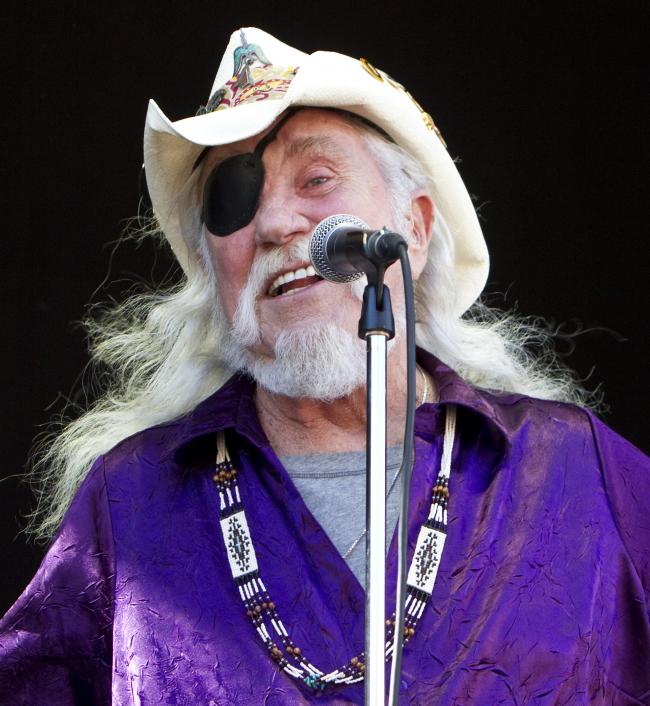
Ray Sawyer, 1937-2018
Six episodes ago we took a peek at the work of poet/playwright/singer/songwriter/Renaissance Man Shel Silverstein, and I guess the most notable thing related to that show that’s happened since then, is that Ray Sawyer, the singer/guitarist for Dr. Hook and the Medicine Show, died on New Year’s Eve at the age of 81 after a short illness. Sawyer was the main singer on “Sylvia’s Mother” and “Cover of Rolling Stone”, among others.
So this week we’re looking at some more of his work, including what’s perhaps his most-covered song (and, oddly, a song that despite all the covers doesn’t seem to do anything on the charts; I think it’s just a song that people like to sing), and a quick look at his theater work.
With any luck, you’ve already got this in your podcatcher, but if not, here it is for your listening/downloading pleasure:
It’s the holiday season, and that means that radio stations have moved a bunch of traditional songs into their rotations. Some of them have even gone All-Christmas-All-The-Time. But it seems as though some of these songs don’t stand up to closer scrutiny as Christmas songs. They’re set in the winter time, but they don’t appear to mention Christmas at all, or they happen to take place during the season but that’s about it.
And while I’m complaining about Christmas songs that don’t stand up to scrutiny, have you really listened to Andy Williams’ “Happy Holiday (The Holiday Season)”? Sometimes I think poor Andy had a stroke in the middle of recording that one. It’s little more than a bunch of clichés strung together, and then he loses his mind and starts spouting nonsense lyrics, and failing miserably to make them rhyme. I’m going to blame Kay Thompson for this mess, because there’s no way Irving Berlin is responsible.
And don’t get me started (again) on “My Favorite Things.”
During the show I mentioned a short cartoon version of “Frosty the Snowman” that’s aired every Christmas season since 1955 on WGN-TV in Chicago. Here’s that clip for your listening pleasure:
And while I’m providing extra goodies, here, also as promised, is the audio of Wally Schirra reporting a “UFO” in December of 1965.
When I was in the third grade I sent a letter to NASA, and they sent me a packet of stuff, including photos of astronauts on the moon, a photo of Earth taken from space, and a flyer with frequently-asked questions about outer space. I remember distinctly that one of the questions was about whether the astronauts had ever seen a UFO, and the answer was that Wally Schirra had reported a UFO that turned out to be Santa Claus. I presume they were referring to this event.
At any rate, the episode has been available for a little while now, but if you’re the DIY sort you may want to download or listen here:
I’m likely to be out of town next weekend, so it’s possible that I’ll be taking a week off from the show. Next time around we finish Shel Silverstein for sure, and then I have a listener-suggested episode.
Have a great holiday! Thanks so much for your support!
John D. Loudermilk Jr. (March 31, 1934 – September 21, 2016)
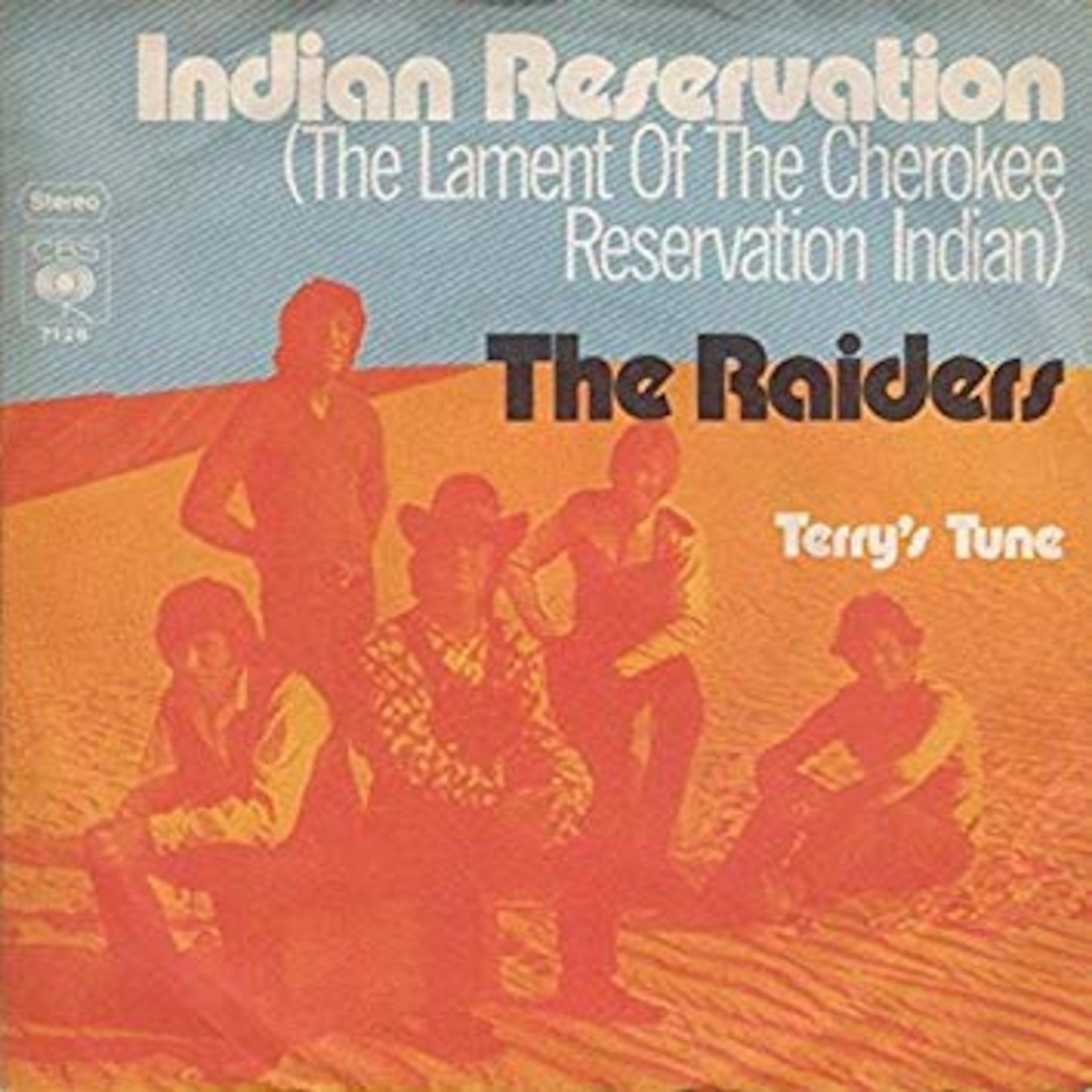
John D. Loudermilk (the D doesn’t stand for anything) was a singer-songwriter who wrote a few hits for a few different artists, and he also fancied himself as a prankster. So when he was asked by a Las Vegas radio station about his inspiration for writing the song “Indian Reservation (The Lament of the Cherokee Indian)”, he told a wild tale about meeting a band of Cherokees in a snowstorm. And when Casey Kasem’s crew got wind of the story, they called him to confirm it, and he changed it to sound even more dire. They bought it, Casey aired it, and now that the show is in re-runs, the story gets a national re-airing every now and again. And it’s entirely nonsense. But that also means we don’t really know what led him to write this song, which contains several elements indicating that Loudermilk really knew next to nothing about the Cherokee Nation.
Don Fardon’s 45 sleeve
Does that make the song offensive? That seems to be a mixed bag, based on my research. Some people are pretty specific about the fact that it gets so many things just plain wrong. Some people don’t like the whole cultural appropriation end of things, where white guys (Loudermilk as the writer, Fardon and the Raiders as the performers) are singing about Native Americans in the first person.
No, I don’t know why both records have orange sleeves.
Some people also make a point of saying “I’m xx% Cherokee and it doesn’t offend me at all.” So in this respect, your mileage may vary.I asked my wife, who is part Cherokee, about it and she doesn’t like the song, largely because of the factual inaccuracies. I think she was pleasantly surprised that I knew what they were, though. But I don’t think she’ll be making a point of tuning in to this episode. Then again, I’m pretty sure she only listens when I play it back in my car and she’s there for it.
At any rate: my apologies for the late delivery, but here’s hoping you enjoy it. As usual, your podcatcher should have it now (or very soon, anyway), or you can listen/download it from here:
Thanks so much for the reviews I’ve seen, and the good words on Facebook. Next week will be a whole bunch of quick bits on Christmas songs, and then—finally—we’ll finish up the year with Part Two of Shel Silverstein.
John D Loudermilk wrote a song that’s nearly devoid of actual facts. When it became a hit, a couple of interviews he did about that song turned out also to be mostly devoid of facts.
Contains information related to marketing campaigns of the user. These are shared with Google AdWords / Google Ads when the Google Ads and Google Analytics accounts are linked together.
90 days
__utma
ID used to identify users and sessions
2 years after last activity
__utmt
Used to monitor number of Google Analytics server requests
10 minutes
__utmb
Used to distinguish new sessions and visits. This cookie is set when the GA.js javascript library is loaded and there is no existing __utmb cookie. The cookie is updated every time data is sent to the Google Analytics server.
30 minutes after last activity
__utmc
Used only with old Urchin versions of Google Analytics and not with GA.js. Was used to distinguish between new sessions and visits at the end of a session.
End of session (browser)
__utmz
Contains information about the traffic source or campaign that directed user to the website. The cookie is set when the GA.js javascript is loaded and updated when data is sent to the Google Anaytics server
6 months after last activity
__utmv
Contains custom information set by the web developer via the _setCustomVar method in Google Analytics. This cookie is updated every time new data is sent to the Google Analytics server.
2 years after last activity
__utmx
Used to determine whether a user is included in an A / B or Multivariate test.
18 months
_ga
ID used to identify users
2 years
_gali
Used by Google Analytics to determine which links on a page are being clicked
30 seconds
_ga_
ID used to identify users
2 years
_gid
ID used to identify users for 24 hours after last activity
24 hours
_gat
Used to monitor number of Google Analytics server requests when using Google Tag Manager
1 minute
Marketing cookies are used to follow visitors to websites. The intention is to show ads that are relevant and engaging to the individual user.
Facebook Pixel is a web analytics service that tracks and reports website traffic.
Registers a unique ID on mobile devices to enable tracking based on geographical GPS location.
1 day
VISITOR_INFO1_LIVE
Tries to estimate the users' bandwidth on pages with integrated YouTube videos. Also used for marketing
179 days
PREF
This cookie stores your preferences and other information, in particular preferred language, how many search results you wish to be shown on your page, and whether or not you wish to have Google’s SafeSearch filter turned on.
10 years from set/ update
YSC
Registers a unique ID to keep statistics of what videos from YouTube the user has seen.
Session
DEVICE_INFO
Used to detect if the visitor has accepted the marketing category in the cookie banner. This cookie is necessary for GDPR-compliance of the website.
179 days
LOGIN_INFO
This cookie is used to play YouTube videos embedded on the website.