One of The Drifters’ bigger hits might have been a sequel to one of their earlier songs, but it was definitely a prequel to one of their later songs.
Podcast: Play in new window | Download (Duration: 13:59 — 11.3MB)

One of The Drifters’ bigger hits might have been a sequel to one of their earlier songs, but it was definitely a prequel to one of their later songs.
Podcast: Play in new window | Download (Duration: 13:59 — 11.3MB)
 In 1971, Don McLean was a known artist but hadn’t yet hit it big with “American Pie.” Lori Lieberman was a 19-year-old singer-songwriter who’d recently scored a contract. Lieberman attended one of McLean’s shows and she was so struck by his performance

of the song “Empty Chairs” that she wrote a poem about it, more or less on the spot. She took the notes to her collaborators and they put together a song for her album. It became her first single, but it was quickly overshadowed when Roberta Flack covered it.
 While the song was covered numerous times, including versions by artists as diverse as Perry Como and Michael Jackson, it wasn’t until The Fugees put together a hip-hop cover that the song gained new life. Lauryn Hill’s singing gives the song an extra emotional ache, perhaps because their original idea was to turn the song into a cautionary tale about substance abuse, an idea that the original writers didn’t support.
As usual, your podcatcher should have the show by now, or you can play it right here. Or, if you prefer to download it yourself, click here and have at it.
Podcast: Play in new window | Download (Duration: 13:45 — 11.4MB)
And remember: you can also listen to the show via Stitcher, iHeartRadio, Google Play Music and TuneIn.com, which means you can also play it through your Amazon Alexa! (“Alexa, play How Good It Is on Tune In Dot Com.”) Go check out the links somewhere in the right-hand column.

Before I do anything else, let me give a shout-out to a friend of the podcast, and one of its first fans who wasn’t related to me. Connie Paulson provided the artwork that you see in this post. You can see more of her stuff if you hook up with the show’s Facebook page.
 In 1975 Aerosmith was pretty much just another rock band with a modest hit, but when they got writer’s block, a trip to a Mel Brooks movie inspired them to come up with a title, and then Steven Tyler wrote the lyrics over the next day or so–twice, as the story goes. The song was a hit, and ten years later, it was a hit again when Aerosmith teamed up with rap act Run-DMC to cover the song. Check out the video; it’s fun, it’s very creative, and you barely notice that most of the band is missing:
Your favorite podcatcher should have the show by now, but feel free to play it right here, if you’re so inclined. Or, if you prefer to download the episode on your own, follow this link.
Podcast: Play in new window | Download (Duration: 12:54 — 10.6MB)
And remember: you can also listen to the show via iHeartRadio, Google Play Music and TuneIn.com, which means you can also play it through your Amazon Alexa! (“Alexa, play How Good It Is on Tune In Dot Com.”)
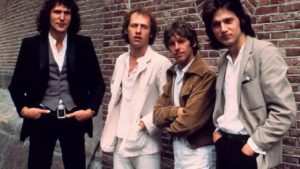 While I’ve made the joke in the past about a band taking ten years to become an overnight success, Dire Straits was successful almost from the jump. After a false start with EMI records, the band found a friend in a BBC disc jockey to whom they’d merely turned for advice. That DJ liked what he heard and started playing their stuff, which turned into a contract with a local label, and which they parlayed into a contract with Warner Brothers Records. And all of it in about the space of a year.
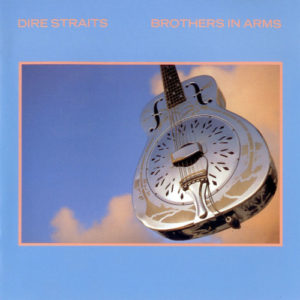
Knopfler composed the song on the National Steel guitar you see in the picture here, but he wasn’t happy with it until he played it on a 1961 Stratocaster. He was so happy with the way it sounded that he stuck with the Strat for years afterward.
Given that Dire Straits was their first album, and it did so well worldwide, it was pretty clear early on that Knopfler is a ridiculously talented guitarist who has a way of making it look easy, and it seems to me that unless you’re a music aficionado, his talent is generally under-appreciated.
By now your favorite podcatcher should have this week’s show in your device, but if not, you can listen to it right here: If you’d prefer to download the episode directly, you can do so by going to this link (autoplays in a new window).
Mark Knopfler sees a band performing to a nearly-empty house in a South London pub, and turned the experience into Dire Straits’ breakout single.
Podcast: Play in new window | Download (Duration: 11:14 — 9.1MB)
:format(jpeg):mode_rgb():quality(40)/discogs-images/R-6480860-1426115824-8600.jpeg.jpg) Ugh. I really hate doing this, but there’s no show this week. I’ve got an upper respiratory infection, which I think you were able to hear a little bit of last week, but it’s really affected both my voice and my ability to concentrate.
Ugh. I really hate doing this, but there’s no show this week. I’ve got an upper respiratory infection, which I think you were able to hear a little bit of last week, but it’s really affected both my voice and my ability to concentrate.
If it clears up faster than I anticipate, I’ll record and release a show mid-week, with another next Saturday. Otherwise it’ll be next week.
In the meantime, I leave you with this. Please don’t hate me.

By the time early 1965 came around, the Rolling Stones were certainly in the realm of a band that had paid their dues. They’d spent time touring the UK to build up a following there, they’d been to the US once without a hit, which wasn’t an especially successful tour, and they’d been there a second time, a trip that went much better. However, during that tour there were still a few mishaps, and that, plus a guitar riff that Keith Richards literally wrote in his sleep, transformed the Rolling Stones from Just Another British Band Covering American R&B tunes, into a genuine worldwide phenomenon.

The time from concept to release was a little over a month, and from release to the top of the charts (in the US, anyway) was only another few weeks. The song dominated the Billboard Hot 100 for the entire month of July 1965, and became the #3 song of the year, behind “Wooly Bully” (Wooly Bully? Really? That was #1?) and “I Can’t Help Myself (Sugar Pie Honey Bunch)”.
Your favorite podcatcher may have it by now, but if not, you can always listen to, or download, the episode here:
You can also find the show in the Google Play Music store or in iHeartRadio. I’m still working on Spotify, but they take a long time to make the yes/no decision. In the meantime, please take the time to leave a rating wherever you’re listening. And thanks for continuing to support the show!
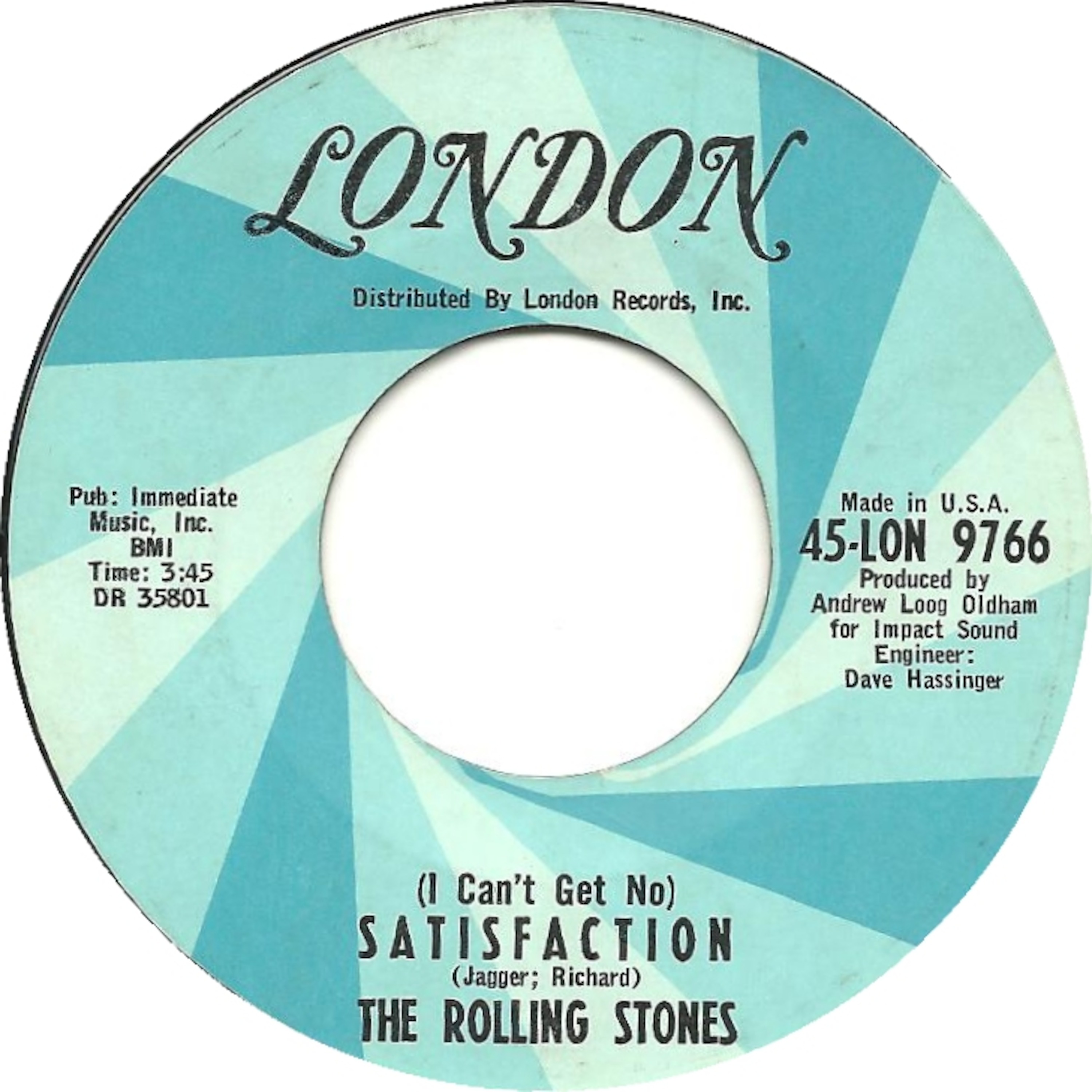
By early 1965, the Rolling Stones had scored a couple of hits, but they were still Just Another British Band Covering a Bunch of American R&B Songs. Then one night Keith Richards literally wrote something in his sleep, and it became the start of something that turned them into a worldwide phenomenon.
Podcast: Play in new window | Download (Duration: 15:44 — 12.7MB)
 As a group, the Thompson Twins went through several permutations of their lineup, with the band’s membership count as high as seven in 1981. But before long they’d pared themselves down to a trio, and did terrible things to their hair, as so many of us did in the 1980s. Except me, but I’ve never been one of the cool kids, so.
 This week we’re taking a look at those early incarnations of one of the bands that helped define the Second British Invasion, and helped bring New Wave music from its post-Punk roots into the Pop mainstream. And that’s about the most Rolling Stone thing I’ve written.
I don’t know where you’ve been getting the show from, but the show is now available on iHeartRadio! You can see the whole thing here. So if that’s your thing, now you have a link to me there as well. Oddly enough, though, iHeartRadio is representing all of the shows’ lengths in seconds as minutes. So this 11:14 show is listed as being 679 minutes. Weird, and I hope that this gets straightened out in a bit.
If you’re using Podcast Republic, or iTunes or something else, you should already have the show in your podcatcher. If you prefer to listen online or to download the episode, you can do that here:
And yes, I know I mis-pronounce “bass” early in the show. I gotta stop recording after midnight.
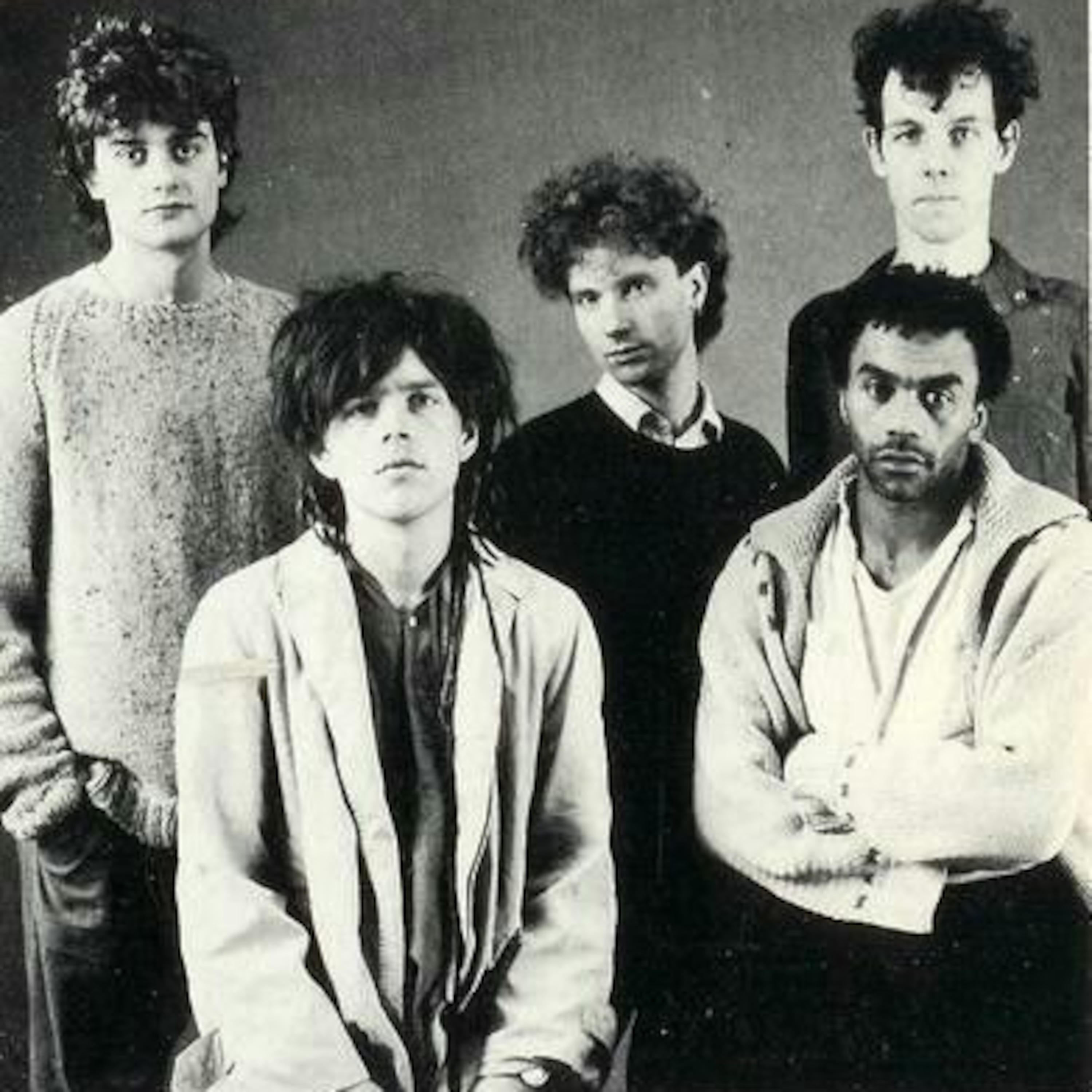
There was nobody named Thompson, and there weren’t any Twins. But they were a part of the Second British Invasion of the 1980s, and this is how they got there.
Podcast: Play in new window | Download (Duration: 11:14 — 9.1MB)