

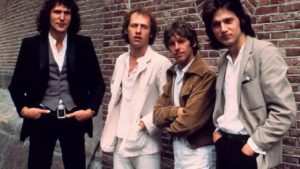
 While I’ve made the joke in the past about a band taking ten years to become an overnight success, Dire Straits was successful almost from the jump. After a false start with EMI records, the band found a friend in a BBC disc jockey to whom they’d merely turned for advice. That DJ liked what he heard and started playing their stuff, which turned into a contract with a local label, and which they parlayed into a contract with Warner Brothers Records. And all of it in about the space of a year.
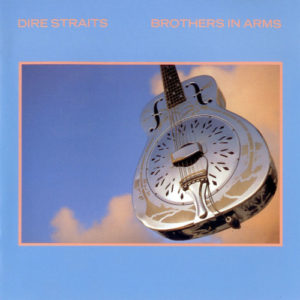
Knopfler composed the song on the National Steel guitar you see in the picture here, but he wasn’t happy with it until he played it on a 1961 Stratocaster. He was so happy with the way it sounded that he stuck with the Strat for years afterward.
Given that Dire Straits was their first album, and it did so well worldwide, it was pretty clear early on that Knopfler is a ridiculously talented guitarist who has a way of making it look easy, and it seems to me that unless you’re a music aficionado, his talent is generally under-appreciated.
By now your favorite podcatcher should have this week’s show in your device, but if not, you can listen to it right here: If you’d prefer to download the episode directly, you can do so by going to this link (autoplays in a new window).

 The song was recorded within just a few weeks of the tragedy, and was released the following summer. Just a few days after the first anniversary of the sinking, the song hit Number One on the Canadian charts, and peaked at #2 in the US. I have to admit, though, that when the song came out, 13-year-old me had no idea that it was about a recent event. I figured it was either fictional, or it had happened many years ago. Imagine my surprise!
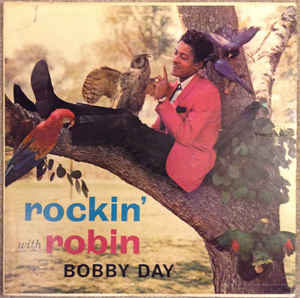 It was originally spelled “Rock-In Robin,” which is a distinction that’s too tedious to elucidate verbally, and it was Bobby Day’s biggest hit. But while Bobby was known for his songwriting, he didn’t write this one.
 In 1970, Led Zeppelin band members Robert Plant and Jimmy Page wanted a new song to use as the centerpiece of their concerts. so they retreated to a cottage in Wales, as you do in these situations. And when they emerged, they had the genesis of the song that’s made so many “Best of…” lists, it’s actually created some backlash over the years, including from Robert Plant himself.


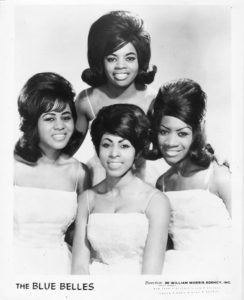
 sound, and it was during that era that they scored their biggest hit, a proto-disco-funk track called “Lady Marmalade”, which went to Number One on the Billboard Chart in March of 1975.
 Sad news from the world of music this week as we learn that Edwin Hawkins has died at the age of 74. I have to confess that this came as a surprise because I started doing the math and realized that Hawkins was in his mid-20s when “Oh Happy Day” became a hit. For whatever reason I thought he was at least twenty years older THEN.
 Hawkins was the founder of the Northern California State Youth Choir, and the choir recorded some songs to make a fundraiser album, which unfortunately didn’t get pressed until after the event for which they needed the money. That event was a choral competition, and the NCSYC came in second, perhaps because “Oh Happy Day” wasn’t one of the songs they sang. As it turns out, that wasn’t one of their favorite songs!
 The unexpected success of “Oh Happy Day” led to the group being asked to provide the backup singing for Melanie’s tribute to her experience at Woodstock, “Lay Down (Candles in the Rain)”.
 Neil Young sang “It’s better to burn out, than to fade away,” but Damn, Janis, couldn’t you have burned with us just a little bit longer?


