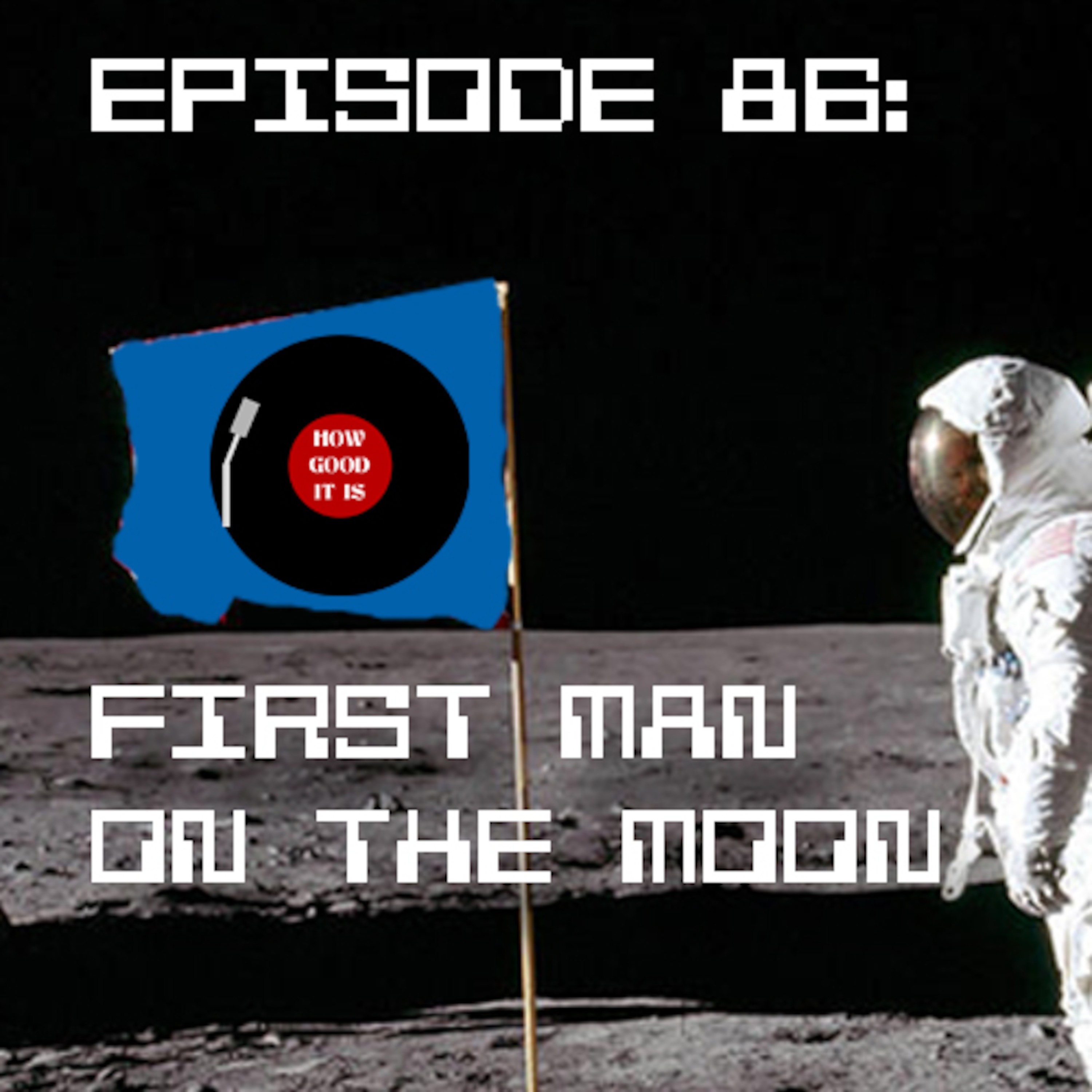
What do you think? You like that picture? I PAID for that stock photo, like some kind of honest guy.
Despite this being perhaps The Hollies’ biggest hit in the US, it still managed not to make it to the Number One position on the Billboard Hot 100. It was kept out of that position by Gilbert O’Sullivan’s “Alone Again (Naturally)” for both of the weeks that it spent at #2 with a bullet. And for all that time on the charts (11 weeks altogether), that’s a pretty popular song, considering that nobody understands the words. At least, not until you’ve seen them. Then they totally make sense. Plus, I’d be willing to bet that it’s not about what you think it’s about.
Below is the link for this week’s show for your downloading and/or listening pleasure.
The Summer of 1969 was also the Summer of Woodstock. Hundreds of thousands of people made their way to Max Yasgur’s farm in Bethel, New York (they couldn’t get a permit for the town of Woodstock, but the posters had already been made, and you know how it goes…) for a few days of Peace, Love and Music.
Woodstock proved to be like nothing else, before or since. Attempts to replicate its feeling, or its scale, or anything else about it gets washed away by nostalgia and the sense that someone’s trying to make a buck off of it. And, of course, they are. They were trying to make a buck off the original show, too–in fact, the organizers were hoping to raise money to build a recording studio. That didn’t work out because financially the show barely broke even. But the film and record rights put them back in the black several months later.
Several acts were barely known at the time of the show, including Crosby, Stills, Nash and Young (performing for the second time ever), and Sha-Na-Na, which opened for Jimi Hendrix. Most of them have found a place in the rock and roll firmament following the show (e.g. Melanie was a relative unknown; Richie Havens, who opened the show, was barely known, Santana had been around for ten years but hadn’t broken through yet); others were pretty much unheard-of afterward (Keef Hartley Band? ).
In the wake of the show were three things that gained lasting fame, and they all happened around the same time, in early 1970. The first was this:
The other two? We talk about those in this week’s episode. I’m no spoiler.
Speaking of which, if you want to see the telegram sent to the band in today’s trivia question, look under the spoiler button below this week’s episode.
Finally, this is the text of the telegram related to the trivia question for this episode. See if you can find the hidden message!
If you’ve heard the episode and you want to see what I’m talking about, click the button to show the art. If you haven’t heard it yet, go back and listen first. It’s OK, we’ll still be here for you.
For reasons I can’t go into Until you are here Clarifying your situation Knowing you are having problems You will have to find Other transportation Unless you plan not to come.
This is the penultimate of my special episodes concentrating on the Summer of 1969, and this time around it concerns one of the more horrific crimes of the 20th Century–the Tate-LaBianca murders during the weekend of August 8 and 9.
The murders were incredibly savage, and intended to strike terror into the hearts of Californians, but the hidden agenda behind them was that they were meant to be a model for African-Americans to use as part of the uprising that, according to Charles Manson, was coming very soon, as predicted to him by The Beatles, when they seeded their self-titled album (usually just called “The White Album”) with clues.
Manson’s plan was to commit the murders, which would show Blacks “how to do it,” then he and his family would hide in a deep hole in the ground while the ultimate race war, which he called “Helter Skelter”, took place on the surface. Then, when the White race was wiped out and the Blacks realized that they hadn’t been in charge in so long that they had no idea what to do next, that’s when Manson and his followers would emerge from the hole and take over.
Crazy? Of COURSE it’s crazy. Before 1968, all Manson cared about was staging orgies. Then he heard this album and it short-circuited the wiring in his head.
So this week we look at a bunch of songs that Manson took as clues to the messages that The Beatles were sending to him, and just how badly he’d gotten it wrong.
Your podcatcher software, as usual, should have the show by now, but if you’re extra-macho about these things, feel free to listen or download from right here:
In the late 1960s, both the music scene and the theater scene were changing, and the 1968 premiere of the show Hair on Broadway was a confluence of the two.
Hair is generally considered to be the first rock musical, as opposed to a rock opera, where all the dialogue is sung, and apparently there are debates about which one was first because there were several concurrent projects going on. At any rate, several songs from the show became pop hits in their own right, albeit from artists other than the ones who performed on the original soundtrack.
Also (perhaps coincidentally), all of those hits were recorded and released during a short period of time, short enough that one of them actually kept another one out of the Number One slot on the Billboard chart.
As I noted during the show, here’s the clip of The Cowsills singing “Hair” on the Wonderful World of Pizzazz. (As I also noted, this clip has that watermark throughout, but it’s by far the best quality clip, so let’s all live with it.) Dig that laugh track, because people in gorilla suits are funny, I guess. Look closely and you’ll realize just how small the set was for this segment:
This episode is coming a few hours early; next week’s will likely arrive quite late in the day. Wife and I are going on a little road trip and I expect to be back home very late Saturday night. But don’t despair! It’s going to be another great, over-stuffed, super-size show!
In the meantime, however, feel free to enjoy this week’s great, over-stuffed, super-size show:
On July 20, 1969, Neil Armstrong stepped off a ladder and became the first human being to set foot on a celestial body that wasn’t the planet Earth.
Within no more than a couple of weeks, at least two records had been rush-produced and released, and a third only a few weeks after that, commissioned by President Richard Nixon as a tribute to be performed at a state dinner.
This is another over-stuffed episode, as I play those three records in their entirety and talk about some of the trials that the Apollo 11 mission went through, that doesn’t usually get into the history books.
Amstrong and Buzz Aldrin walked the surface of the moon, collecting samples and setting up experiments, while Michael Collins orbited the moon above them, hoping that all went well so that he wouldn’t be forced to return alone. He thought that something like that would mark him forever. Collins never did make it to the moon; in fact he left the Space Program shortly after Apollo 11 to become the Assistant Secretary of State for Public Affairs, and later the director of the Air and Space Museum, overseeing its completion and opening to the public.
Among other things, the astronauts left a plaque behind on the moon, commemorating the historic event. And, if you’ve already heard the show, you know that the plaque is part of this week’s trivia question. Have a look:
Here, as usual, is the episode for your listening or downloading pleasure. Please be sure to share the show with someone you love, and/or leave a rating wherever you get your podcasts. Peace.
This week, we’ve got a super-sized episode of the show (nearly an hour!) as I sit down with Christopher McKittrick, author of Can’t Give it Away on Seventh Avenue: The Rolling Stones and New York City.
Chris and I had a fascinating chat about the band and their long-term relationship with New York. All of them, whether collectively or as individuals, spent a lot more time there than you probably suspect, and McKittrick takes us along on the journey, demonstrating how the city infused itself into their lyrics, perhaps subtly at first in albums such as Goat’s Head Soup, but certainly more overtly by the time they got to one of their best albums, Some Girls.
Christopher took the time to run down a bunch of rumors related to the Rolling Stones, some of them started (as it turns out) by the band themselves. It’s a fascinating journey for fans of both the Stones, the City, and Rock and Roll in general.
If you’re not already subscribing to the show, or if you’re a new listener (Welcome!), here’s the player/download link:
And, as usual, if you’re enjoying this show then please take the time to share it with someone else, and/or leave a rating on your favorite podcatcher.
The Dixie Cups began as two sisters and their cousin performing here and there in the New Orleans area, when they were discovered by Joe “You Talk Too Much” Jones and brought to New York to make an album with Lieber and Stoller.
Their first single was a Number One hit, making them the first American group to knock a British Invasion band off that lofty Billboard perch. And the band they bumped off? A group called The Beatles. (I think they were okay after that setback, though.)
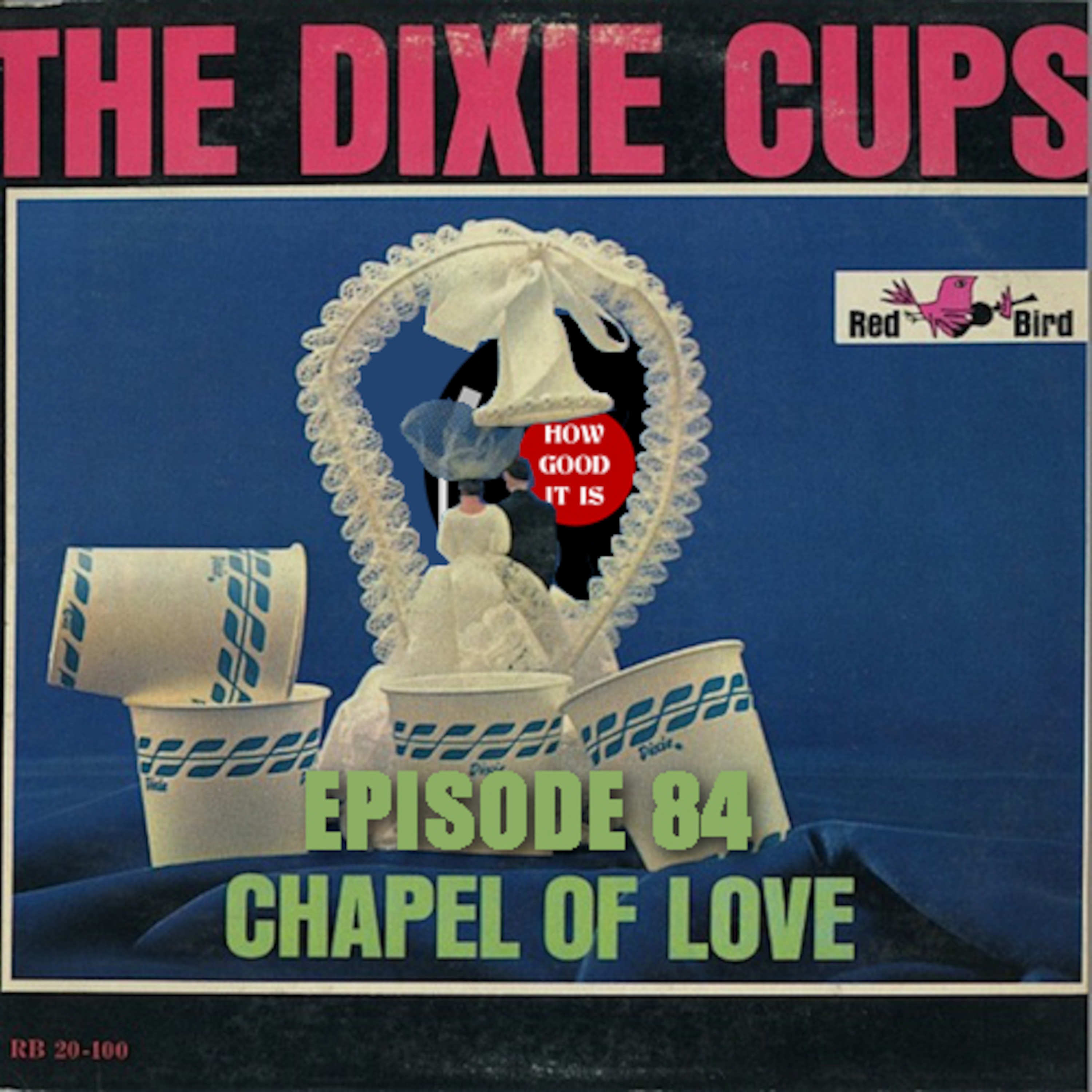
If your habit is to read these show notes that I post, my apologies for repeating the Tarpon Springs story during this week’s show. I know that’s a little bit redundant for you. But yes, this week’s artwork is derived from the album I purchased, though I lopped off the top (just more black) and the bottom (catalog number) to make the whole thing more visible. Mea culpa.
Also, a technical note: I have no idea why my microphone sounds so hot this week; I promise I’ll be better in the future.
Next week I have something pretty special lined up, and the format of the show will be a little bit different, so Get Ready for Stuff!
So, once again, my apologies for the lateness of this episode, and a little bit for the sound. I’m still on the road and using a different set of tools to put this thing together. I’m kinda-sorta getting the hang of it, but at this rate I’ll be doing it all summer like this.
So here’s a fun little coincidence: I’m in Florida this week because my nephew got married this weekend. I thought I’d be a little bit cute and have this week’s episode be a wedding-themed song, like “White Wedding” or “Wedding Bell Blues”, but I settled on “Chapel of Love.”
On Wednesday, my wife and I spent the day walking in and out of the little shops in Tarpon Springs, a community so Greek that Zorba himself would say, “Hey, dial it back a little, willya?” And as it happened, one of the shops, near the end of Dodecanese Blvd, in the Lighthouse Shoppes building, is a used record store. I went in, not expecting to find much good, but instead I found…
…an original 1964 copy of the Chapel of Love album.
This is a sign, says I. And I decided to push that episode back a week so I could use that album for my source audio (no turntable on the road, alas), surface noise and all.
And that’s about it. I don’t have anything else good to tell you about Carl Douglas, because I used it all in the show. Except that he’s in his late 70s now and still performing.
Here’s Episode 83.
Next week: back in Baltimore!
Cookie Consent
We use cookies to improve your experience on our site. By using our site, you consent to cookies.
Contains information related to marketing campaigns of the user. These are shared with Google AdWords / Google Ads when the Google Ads and Google Analytics accounts are linked together.
90 days
__utma
ID used to identify users and sessions
2 years after last activity
__utmt
Used to monitor number of Google Analytics server requests
10 minutes
__utmb
Used to distinguish new sessions and visits. This cookie is set when the GA.js javascript library is loaded and there is no existing __utmb cookie. The cookie is updated every time data is sent to the Google Analytics server.
30 minutes after last activity
__utmc
Used only with old Urchin versions of Google Analytics and not with GA.js. Was used to distinguish between new sessions and visits at the end of a session.
End of session (browser)
__utmz
Contains information about the traffic source or campaign that directed user to the website. The cookie is set when the GA.js javascript is loaded and updated when data is sent to the Google Anaytics server
6 months after last activity
__utmv
Contains custom information set by the web developer via the _setCustomVar method in Google Analytics. This cookie is updated every time new data is sent to the Google Analytics server.
2 years after last activity
__utmx
Used to determine whether a user is included in an A / B or Multivariate test.
18 months
_ga
ID used to identify users
2 years
_gali
Used by Google Analytics to determine which links on a page are being clicked
30 seconds
_ga_
ID used to identify users
2 years
_gid
ID used to identify users for 24 hours after last activity
24 hours
_gat
Used to monitor number of Google Analytics server requests when using Google Tag Manager
1 minute
Marketing cookies are used to follow visitors to websites. The intention is to show ads that are relevant and engaging to the individual user.
Facebook Pixel is a web analytics service that tracks and reports website traffic.
Registers a unique ID on mobile devices to enable tracking based on geographical GPS location.
1 day
VISITOR_INFO1_LIVE
Tries to estimate the users' bandwidth on pages with integrated YouTube videos. Also used for marketing
179 days
PREF
This cookie stores your preferences and other information, in particular preferred language, how many search results you wish to be shown on your page, and whether or not you wish to have Google’s SafeSearch filter turned on.
10 years from set/ update
YSC
Registers a unique ID to keep statistics of what videos from YouTube the user has seen.
Session
DEVICE_INFO
Used to detect if the visitor has accepted the marketing category in the cookie banner. This cookie is necessary for GDPR-compliance of the website.
179 days
LOGIN_INFO
This cookie is used to play YouTube videos embedded on the website.