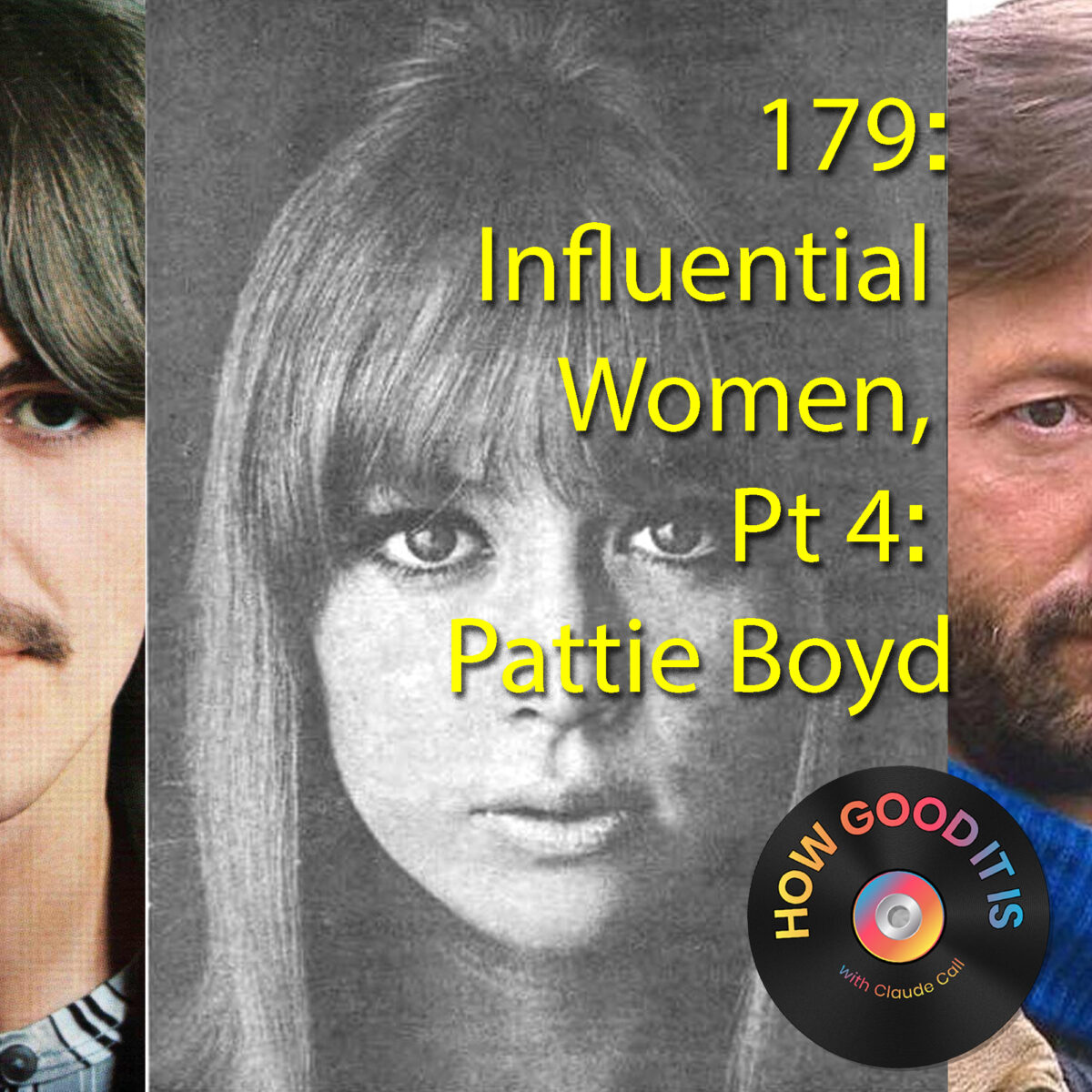
Pattie Boyd was the inspiration for a huge number of songs. Some of them went to the top of the charts, some of them weren’t released as singles, but nearly all of the songs about her are well-known, and not just because they’re about her; because they’re actually pretty darn good.
And the crazy part is that all of them came from two men: George Harrison and Eric Clapton. There’s a song in Clapton’s catalog that could have easily been about her if you try to read into the lyrics, but it’s more coincidence than anything else, since it wasn’t written by Clapton. But it’s also quite possible that the lyrical content is one of the things that gave it its appeal to Clapton. Who knows.
When I return to this topic (in two episodes), we’ll talk about the other contender for the big title.
If you’re a Patron of the show, you’ve already gotten this episode in your Patreon feed. Feel free to listen again here, if you’re so inclined. Newsletter should be back next week; I’m still readjusting my work flow. You can click here to become a Patron of the show.
One of my favorite titles for an album comes from The Animals. They did a bunch of albums up to 1969, then for a year or two there were a couple of compilation albums after they broke up. But in 1977 the Animals reunited and released a new album, titled Before We Were So Rudely Interrupted.
I don’t know what made me think of that. Anyway. (heh.)
This was one of those episodes where, the more I found, the more there was TO find. And so what I thought would be a relatively short episode clocks in at close to twenty minutes. What a bonus for ye!
“Without You” has humble beginnings and a huge, happy ending, except for the composers, Pete Ham and Tom Evans. Although it was a huge hit for Harry Nilsson and later Mariah Carey, neither composer saw much money for it. They, themselves, didn’t see much potential in the song, so they buried it in the dead center of the album, at the end of Side 1. Then in 1975, after years of mismanagement and legal squabbles, Ham committed suicide shortly after learning that all of his money had disappeared. Then, in 1983, following a dispute over royalties from the song, which had been in escrow going back to the Apple Records era, Evans also committed suicide.
Click here to become a Patron of the show. As a Patron, you get access to a weekly newsletter that publishes at least 48 times per year (stuff happens once in awhile, ya know?). You also get occasional goodies like:
Giveaways
Special videos
Bonus Episodes
A Sense of Pride for Having Helped Foster an Independent Creator
You might remember a few episodes back when I teamed up with Mike Messner. He’s the host of the Gordon Lightfoot appreciation podcast Carefree Highway Revisited. Well, Mike is back, and this time around we’re talking about Lightfoot’s first big American hit, “If You Could Read My Mind.”
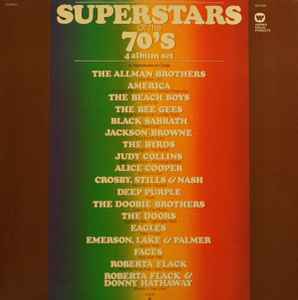
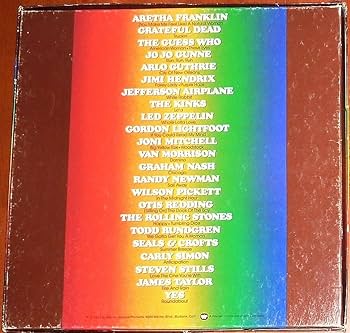
I actually went looking around for the album that I’d first heard this song on, and it turned out that I was exactly correct about its title:
This was a four-album box set that came out in 1973, so clearly the folks at Warner Brothers didn’t have a lot of hope for the rest of the decade, musically. However, this is a pretty amazing collection. I don’t think K-Tel ever put anything like this together. And it’s a shame that A) it’s never appeared in cassette or CD format; and B) it’s not likely to be, considering the nightmare it’s got to be to get the rights to them by now. (You can get it on 8-track tape if you’re so motivated, according to Discogs.)
At any rate, I’ve actually wanted to cover this song for a long while, but didn’t really have enough material for an entire episode, so I was glad to have Mike along for the ride this time around.
Click here to support the show via Patreon. As a reminder: Patrons of the show get a newsletter in their email box every Sunday, whether there’s a new episode or not. So I’ve been keeping them apprised of what’s been happening in the news and in my life. They’ve been following me through the “medical issue” that I alluded to early in this episode. And they’ll be getting something extra-special in the next week or two.
This show doesn’t have a transcript except for the one provided by the Blubrry player.
Pardon my allergies; I’ve sounded kind of rough for a week or so. There was a lot of throat-clearing to edit out of this one. I can’t even blame the Southern Studio on this one; it’s the direct result of spending too much time cutting the grass at home. (And THEN I can blame the Southern Studio a little bit, because I went there the next day and it certainly didn’t help matters.)
How does one spend too much time cutting the grass? By having an electric mower and starting the job with a battery that isn’t fully charged, that’s how.
This is an episode topic I’ve wanted to return to for a long time, but for some reason I kept procrastinating. But way, way back in Episode 11, I featured a bunch of songs that had mistakes in them which were discovered before the final product was released, but they decided they liked it better that way and ran with it. And today we return to that well for another dip.
The tough part with songs like this is curating the best ones to use. Led Zeppelin often left in stray noises because they didn’t really care (ringing phones), or because they were actually counting on it (squeaky pedal on Bonham’s drum kit). So finding one that was both inadvertent and improved the recording? Absolute Gold, Jerry. Similarly, The Beatles would make an error in rehearsal or elsewhere and decide that that was something they needed to retain/reproduce (e.g. the wine bottle rattling at the end of “Long Long Long”), so those weren’t really good candidates.
And, of course, you run into a story which is just plain wrong. Yes, Ronnie Van Zant was talking to the board operator when he said “turn it up” while recording”Sweet Home Alabama,” but he did not mourn the loss of doughnuts near the end. (What you’re hearing is, “Montgomery’s got the answer.”)
At any rate, I finally buckled down and did the necessary research, and I hope you have fun with this one as much as I did.
Incidentally, a big shout-out to the newest member of our Wall of Fame. Everyone say hello to Cousin Robert! If you want to join the family, you can click here to become a Patron of the show.
This episode is a special one, boys and berries. Mike Messner, from the podcast Carefree Highway Revisited, joined me a few weeks ago to talk about the Gordon Lightfoot hit “Sundown.”
“Sundown” was Lightfoot’s only song to reach Number One on the Billboard Hot 100. During our conversation we each took our own approach to the song. So what you’re getting is a pretty well-rounded view of it.
In addition, we make a couple of fun diversions to another Lightfoot song and my own personal heartaches. It’s a fun ride, and I invite you to join us.
If you’re interested in listening to Mike’s show, you can click on the link in the first paragraph, or just do a quick search in your favorite podcatcher.
Oh, I do enjoy breaking format once in awhile to do special episodes like this one.
For this year’s Christmas episode, I return to the songs that you don’t seem to hear on the radio when the stations are playing All Christmas All The Time. You’d think that with the huge catalog of recordings to choose from (even if the list of songs is relatively limited), radio stations could go on for literally days without ever repeating a recording. But no, we’re going to get Mariah Carey and Trans Siberian Orchestra over and over and over again.
There was one station that managed to have a pretty deep catalog one year. It was out in Colorado and I think I went four hours before I heard a repeat. So that was pretty good. I don’t think they’re still doing that, though, more’s the pity.
I took a little more time to script this show than I did last year, so for those of you who are interested, there is a transcript this time. Last year, I was working off of notes, and it clearly shows. Hey, you live and you learn. Or you don’t live long. (h/t to Lazarus Long)
Here’s the playlist for this year’s episode:
Grandma Got Run Over By a Reindeer (1979 version)—Elmo and Patsy
Christmas Kisses—Ray Anthony and the Bookends
Christmas on the Block—Alan Mann Band
Crabs for Christmas—David DeBoy
Christmas Time (Don’t Let the Bells End)—The Darkness
How to Make Gravy—Paul Kelly
Santa Claus is Comin’ to Town—Joseph Spence
And finally, let me note that Jenna Getty has come through again with a Christmassy version of the theme music, funded by the Patrons of the show. I haven’t mentioned this enough: Patrons of the show got a special hour-long episode a couple of weeks ago as an extra “Thank You” for their support. Plus they get the Newsletter with my lame blatherings every single week, whether a show drops or not. And if you become a Patron of the show, you’ll have access to all of that. If that sounds interesting to you, please click the link below.
This whole episode came about because of a request by someone who wanted to hear the story behind a song. Unfortunately there wasn’t a lot to it, but it got me thinking about other songs with similar subject matter. And now that I’m typing this, I realize that all the songs I discuss came from roughly the same period of time. What the hell was going on in the late 70s, anyway?
Ah, well. With this episode I feel as though I’ve bookended a series that I started all the way back in Episode 80. Here’s a couple of panels from a Sunday Doonesbury strip from 1979. Nerd that I was (OK, am), I remember when this first appeared:
For what it’s worth, “Songs about prostitutes” is a well I could come back to repeatedly. I’m not sure I have the mental stamina to do so, frankly.
John Hall, you may remember from a couple of episodes ago, is the founder of the band Orleans. He recently released a solo album, his seventh (if you count the John Hall Band material). After spending some time in local and national politics, he returned to Orleans and they’re still making music. In fact, at the time of the previous interview they were putting the finishing touches on Orleans’ first Christmas album.
That album is now finished and is available for your purchasing and listening pleasure. It’s called New Star Shining, and it’s a great piece of work. There’s a lot of original material, a traditional Christmas carol and a single song from more recent holiday music canon. For lack of a better term, it’s a kind of Yacht Rock Christmas album. I think the rowdiest track on it is their version of “Winter Wonderland.”
John and I met in the atrium of a Nashville hotel (more details during the show itself), and I do hope you’ll forgive a little ambient noise. Plus, there was a little bit of both of us fidgeting with our handheld microphones. For all that, once again John comes through as a very thoughtful fellow. By that I mean he’s not spouting out canned answers to the questions I asked (although some of them were inadvertentely rehearsed–my recorder failed and we had to start over again). And even with that technical glitch, he was both gracious and forgiving, and managed to make me feel not as stupid as I originally felt when I looked at the recorder in horror and realized what happened.
Also, I’m a complete idiot because I didn’t ask for an autograph, or a selfie of the two of us, or anything. So this recording is the only evidence that we were in the same space together.
As an aside, the next day I was in the Podcast Movement conference and chatting with the people from ElectroVoice Microphones. I was using some new EV microphones for the interview. I told them about my interview “right over there in the atrium,” and some of the issues I had with the fidgeting noises and such. While we chatted, one of the EV reps walked away and then came back. He handed me a box and said, “Here, try this one.” It was a different model microphone, which he said would probably solve that problem. Boom! Free microphone! I used it to record some other material you’ll hear in an upcoming episode and I think you’ll notice the difference! This is why I worship at the Church of ElectroVoice. I did get the opportunity to thank them again a couple of days later.
So here is my follow-up interview with John, which we did during the first week of August this past summer. Enjoy!
Olivia Newton-John was already a pretty big star by the time 1974 rolled around, but she still hadn’t scored a Number One hit.
Then along came Peter Allen, who was coincidentally also from Australia. Allen was putting together an album of his own, and he enlisted Jeff Barry to help him with the songwriting. Together they put together “I Honestly Love You” and cut a demo. The intent of the demo was to have something to work from when they recorded it for the album.
Instead the demo wound up in the hands of Olivia Newton-John’s producer, who played it for the singer. And the rest, as they say, is history.
Except, not quite. There were a couple of other things that needed to happen. But if I told you here, why would you bother listening to the episode? I ask you!
Because this episode is running a few days late, you’re getting a treat: Episode 146, which will be an interview with John Hall, founder of the band Orleans, will drop either Monday or Tuesday, depending on how quickly I finish my post-production. Hall was a terrific interview and I hope to do a follow-up with him in the near future.
The interesting thing about this song is that it was written for a specific singer. That said, it’s been a pretty big hit for many different artists over the years.
“Everlasting Love” was written in 1967 specifically to match Robert Knight’s voice, but it’s proven to be quite the malleable tune. It’s been rendered in R&B, in disco, in rock, in techno and god knows what else.
So the story behind the song isn’t incredibly interesting. Interesting, but not incredibly so. But the journey it’s taken to embed itself in the hearts of different generations is a fun one. Ride along with me, why don’t you?.
This is not the episode that I teased earlier. That one’s still coming; there’s an interview attached to it and we’ve had some scheduling issues.
As promised, here’s the video of the song by Sandra from 1987. It’s got a very 80s feel to it. I think that comes from the editing and the “backstage” feel it’s supposed to be conveying. I dare you to tell me I’m lying about the Natalie Wood thing:
Contains information related to marketing campaigns of the user. These are shared with Google AdWords / Google Ads when the Google Ads and Google Analytics accounts are linked together.
90 days
__utma
ID used to identify users and sessions
2 years after last activity
__utmt
Used to monitor number of Google Analytics server requests
10 minutes
__utmb
Used to distinguish new sessions and visits. This cookie is set when the GA.js javascript library is loaded and there is no existing __utmb cookie. The cookie is updated every time data is sent to the Google Analytics server.
30 minutes after last activity
__utmc
Used only with old Urchin versions of Google Analytics and not with GA.js. Was used to distinguish between new sessions and visits at the end of a session.
End of session (browser)
__utmz
Contains information about the traffic source or campaign that directed user to the website. The cookie is set when the GA.js javascript is loaded and updated when data is sent to the Google Anaytics server
6 months after last activity
__utmv
Contains custom information set by the web developer via the _setCustomVar method in Google Analytics. This cookie is updated every time new data is sent to the Google Analytics server.
2 years after last activity
__utmx
Used to determine whether a user is included in an A / B or Multivariate test.
18 months
_ga
ID used to identify users
2 years
_gali
Used by Google Analytics to determine which links on a page are being clicked
30 seconds
_ga_
ID used to identify users
2 years
_gid
ID used to identify users for 24 hours after last activity
24 hours
_gat
Used to monitor number of Google Analytics server requests when using Google Tag Manager
1 minute
Marketing cookies are used to follow visitors to websites. The intention is to show ads that are relevant and engaging to the individual user.
Facebook Pixel is a web analytics service that tracks and reports website traffic.
Registers a unique ID on mobile devices to enable tracking based on geographical GPS location.
1 day
VISITOR_INFO1_LIVE
Tries to estimate the users' bandwidth on pages with integrated YouTube videos. Also used for marketing
179 days
PREF
This cookie stores your preferences and other information, in particular preferred language, how many search results you wish to be shown on your page, and whether or not you wish to have Google’s SafeSearch filter turned on.
10 years from set/ update
YSC
Registers a unique ID to keep statistics of what videos from YouTube the user has seen.
Session
DEVICE_INFO
Used to detect if the visitor has accepted the marketing category in the cookie banner. This cookie is necessary for GDPR-compliance of the website.
179 days
LOGIN_INFO
This cookie is used to play YouTube videos embedded on the website.